
Every year, as the Thanksgiving turkey settles, millions of Americans face a familiar dilemma: Should you brave the crowds (or the digital queues) on Black Friday, or wait for the digital discounts of Cyber Monday? The answer isn’t as simple as it used to be. While the lines between these two retail giants have blurred, distinct advantages remain for each day depending on what you need to buy.
For many households, these late-year events offer discounts that even rival Prime Day strategy benchmarks for value.
Understanding the difference can save you hundreds of dollars and protect your holiday budget. This guide breaks down the data, the categories, and the strategies you need to decide when to open your wallet—and when to keep it closed.

Key Takeaways
- Big Ticket Items favor Black Friday: Historically, Black Friday offers the deepest discounts on large appliances, televisions, and expensive consumer electronics.
- Soft Goods shine on Cyber Monday: If you are shopping for clothing, shoes, beauty products, or travel, Cyber Monday often features better site-wide percentage-off deals.
- The “Cyber Week” Blur: Retailers now spread deals across the entire week, meaning the “best” day is often simply the day you see a price that fits your budget.
- Planning Beats Timing: A well-researched purchase on a slightly more expensive day is better than an impulse buy on the “cheapest” day.
- Safety First: Online scams spike during this period; verify sellers and secure your payment methods before checking out.
This guide is for U.S. residents and general consumers looking to optimize their holiday shopping strategies. If you have complex financial circumstances, business inventory needs, or significant debt issues, we recommend consulting with a qualified financial professional.

The Core Differences: In-Store vs. Online Heritage
To understand where the deals are, you have to look at how these days evolved. Black Friday was traditionally the day brick-and-mortar retailers moved from operating “in the red” (loss) to “in the black” (profit). It was built on foot traffic. Retailers used “doorbusters”—limited-quantity items sold at a loss—to get you physically into the store, hoping you would fill your cart with full-priced accessories.
Cyber Monday was the e-commerce answer, debuting in 2005 to encourage people to shop online when they returned to work after the holiday weekend. Because online retailers didn’t have the overhead of physical stores, they could offer broader discounts across their entire inventory rather than just a few loss leaders.
Today, most Black Friday deals are also available online, but the DNA of the deals remains different. Black Friday is still the king of the specific, high-ticket item. Cyber Monday is the champion of volume, bundles, and smaller goods.

Category Breakdown: What to Buy When
Your shopping list should dictate your calendar. Data analyzed from major retailers and price-tracking tools suggests a clear split in where the value lies.
| Category | Winner | Why? |
|---|---|---|
| TVs & Appliances | Black Friday | Retailers want to clear bulky inventory before the new year models arrive. Expect deep cuts on specific models. |
| Laptops & Gaming Consoles | Black Friday | Similar to appliances, big-box stores use these as headline “doorbusters” to drive traffic. |
| Clothing & Shoes | Cyber Monday | Fashion retailers typically offer site-wide coupons (e.g., “40% off everything”) rather than specific item markdowns. |
| Travel & Experiences | Cyber Monday | Airlines and hotels often launch flash sales on Monday (and “Travel Tuesday”) for future bookings. |
| Small Kitchen Gadgets | Tie / Cyber Monday | Instant Pots, blenders, and air fryers are popular filler items for both days, but often see bundle deals on Monday. |
| Beauty & Skincare | Cyber Monday | Direct-to-consumer brands and beauty retailers usually save their best percentage-off codes for Monday. |
If you are looking for a specific model of a 65-inch 4K TV, you should be ready to buy on Black Friday (or even Thanksgiving Day). However, if you are looking to refresh your winter wardrobe, patience until Cyber Monday often pays off with a blanket discount code.
“The most expensive purchase you make is the one you didn’t plan for, regardless of the discount.”

The “Cyber Week” Phenomenon
The stark line between Friday and Monday has faded. Retailers now engage in “deal creep,” launching sales as early as late October. This creates a psychological sense of urgency that lasts for weeks.
According to Investopedia, the concept of a singular shopping day is becoming obsolete as retailers spread promotions out to manage logistics and shipping demands. This shift is actually good for your wallet—it removes the pressure to buy everything in a 24-hour window.
However, this also makes comparison shopping harder. A “Black Friday Deal” labeled in early November might actually be cheaper in December. The best defense is to ignore the label and focus on the price history.

Strategies for Smart Shopping
To win during this season, you need to act like a strategic planner, not a frantic shopper. Here is how to prepare:
Before checking out, remember to use cashback apps to layer additional savings on top of already discounted prices.
1. Set a Hard Dollar Limit
Before you look at a single ad, determine exactly how much you can spend without incurring debt. If you save $200 on a TV but pay $300 in credit card interest over the next year, you have lost money.
2. Use Price History Tools
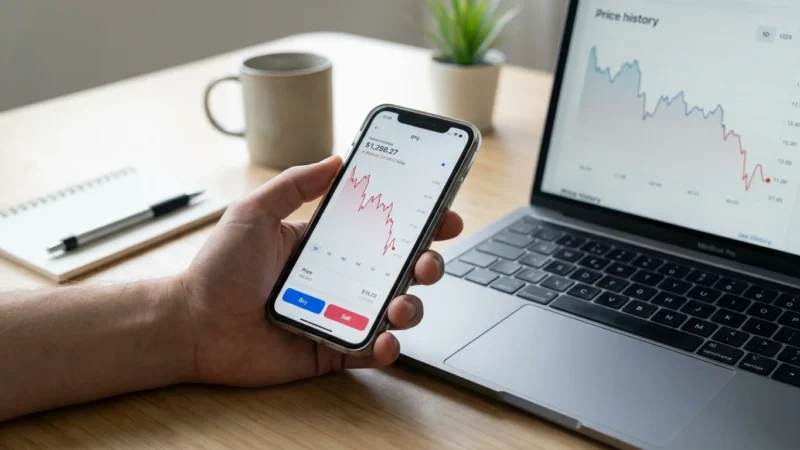
Never assume a “slash-through” price is real. Retailers often inflate the “original” price right before the holidays to make the discount look bigger. Use browser extensions and price-tracking websites to verify if the current price is actually a historic low.
3. Create Accounts Early
For Cyber Monday, speed matters. Create accounts with your target retailers, add your shipping address, and save your payment information securely a few days before. When a limited-time lightning deal drops, you do not want to be fumbling for your wallet.
4. Check Product Quality
Some electronics sold on Black Friday are “derivative models”—versions made specifically for the holiday with fewer ports, lower quality screens, or shorter warranties. Always check model numbers. Experts at Consumer Reports rigorously test products to ensure you aren’t buying a lemon wrapped in a discount bow. Relying on unbiased reviews is safer than trusting the star rating on the retailer’s site.

Avoiding Retailer Psychological Traps
Retailers employ teams of psychologists and data scientists to get you to spend more. Recognizing these tactics is your best defense.
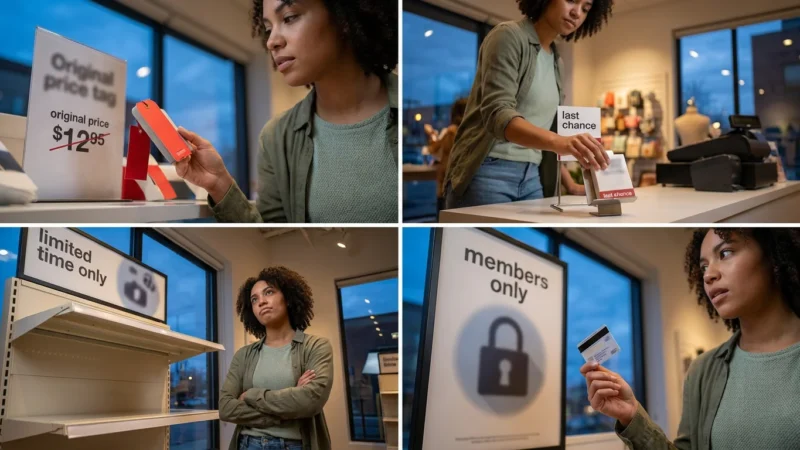
- Scarcity Nuances: “Only 3 left in stock!” might be true, or it might be a programmed algorithm designed to spike your heart rate. Assume there is plenty of stock unless it is a clearance item.
- The Anchor Price: As mentioned, retailers show a high “original price” (the anchor) to make the sale price look reasonable. Ignore the anchor. Ask yourself: “Is this item worth $50 to me?” not “Is it worth saving $50?”
- The Free Shipping Threshold: Spending an extra $25 to save $10 on shipping is bad math. If you don’t need the extra items, you are simply overspending.

The Hidden Costs: BNPL and Credit Cards
The holiday season sees a massive spike in the usage of Buy Now, Pay Later (BNPL) services. These services, which split payments into four installments, can seem harmless. However, they can quickly lead to overextension.
According to the Consumer Financial Protection Bureau (CFPB), BNPL users are more likely to exhibit signs of financial distress than non-users. The ease of clicking “pay later” disconnects the pain of paying from the pleasure of purchasing. If you miss a payment, you may face late fees, and some services report to credit bureaus, potentially harming your credit score.
Furthermore, using a credit card for holiday shopping is only a “deal” if you pay the balance in full when the statement arrives. With average credit card interest rates hovering near record highs, carrying a balance for even a few months can negate any Black Friday savings.

Protecting Your Identity and Money
Cyber Monday is a prime workday for cybercriminals. As you scour the web for deals, scammers are scouring for victims. Be wary of:
- Lookalike Websites: Scammers create sites that look exactly like major retailers but have slightly different URLs (e.g., “amaz0n.com”).
- Phishing Emails: You may receive emails about “problems with your order” or “shipping delays” asking you to click a link. Never click. Go directly to the retailer’s website to check your order status.
- Too-Good-To-Be-True Deals: If a $2,000 laptop is selling for $200 on a site you have never heard of, it is a scam.
The Federal Trade Commission (FTC) warns that social media ads are a major source of shopping scams. Always research the seller before buying from a targeted ad. Check for physical addresses, customer service phone numbers, and independent reviews.

When to Consult a Financial Professional
While holiday shopping is generally a consumer choice, certain financial situations require professional guidance. You should consider pausing your spending and seeking help if:
- You are using credit to pay for necessities: If you are relying on credit cards for rent, groceries, or utilities, holiday shopping should not be a priority.
- You are overwhelmed by debt: If your total monthly debt payments exceed 40% of your gross income, you may be in a danger zone.
- You feel compulsive about shopping: If you shop to relieve anxiety or cannot stop despite negative consequences, this may be a behavioral issue rather than a financial one.
- You are dipping into retirement savings: Never use 401(k) or IRA funds to pay for holiday gifts.
In these cases, a Certified Financial Planner (CFP) or a non-profit credit counselor can help. You can find accredited non-profit counseling through the National Foundation for Credit Counseling (NFCC). They offer free or low-cost reviews of your financial situation and can help you create a debt management plan.
Frequently Asked Questions
Is it better to shop in-store or online for Black Friday?
Most major retailers now offer the same deals online as they do in-store to reduce crowding. However, some “doorbuster” deals on limited-inventory electronics may still be exclusive to physical locations. For the vast majority of shoppers, online shopping is safer, easier, and allows for better price comparison.
Are Cyber Monday deals actually different from Black Friday?
Yes, though the gap is closing. Black Friday tends to focus on technology, appliances, and big-ticket items. Cyber Monday tends to focus on soft goods like clothing, fashion, beauty, and travel, often offering site-wide percentage discounts rather than specific product markdowns.
What if I buy something and the price drops later?
Many major retailers offer price matching or price adjustment policies during the holidays. If you buy an item and the price drops within a certain window (usually 14 to 30 days), they may refund the difference. Keep your receipts and check the retailer’s policy specifically for holiday items, as some “final sale” items are excluded.
Does “Travel Tuesday” actually have good deals?
Yes. The Tuesday following Cyber Monday has emerged as a major day for travel discounts. Airlines, cruise lines, and hotel chains often release discount codes. If you are planning a vacation for the coming year, this is an excellent time to book.
What are the risks of using Buy Now, Pay Later (BNPL) for gifts?
The main risk is overspending. Because the immediate cost seems low, it is easy to stack up multiple BNPL plans that become unmanageable when all payments are due simultaneously. Additionally, missing a payment can result in late fees and damage to your credit score.
When should I consult a professional about my holiday spending?
If you find yourself hiding purchases from your spouse, using payday loans to cover holiday costs, or feeling severe anxiety about your January credit card bills, you should speak with a financial counselor. Resources like the NFCC can provide confidential support.
Are extended warranties sold during these sales worth it?
Generally, no. Experts at Consumer Reports often advise against purchasing extended warranties, as the cost of the warranty is often high relative to the repair rate of modern electronics. Furthermore, many credit cards offer free extended warranty protection if you use the card for the purchase.
Last updated: January 2026. Information accurate as of publication date. Financial regulations, rates, and programs change frequently—verify current details with official sources.
This article was reviewed for accuracy by our editorial team.
For trusted financial guidance, visit
Consumer Reports, The Balance, Kiplinger, Forbes Advisor and Money.com.
Important: EasyMoneyPlace.com provides educational content only. We are not licensed financial advisors, tax professionals, or registered investment advisers. This content does not constitute personalized financial, tax, or legal advice. Laws and regulations change frequently—verify current information with official sources.
Disclaimer: This article is for informational purposes only and does not constitute financial, tax, or legal advice. Individual financial situations vary, and we encourage readers to consult with qualified professionals for personalized guidance. For those experiencing financial hardship, free counseling is available through the National Foundation for Credit Counseling.







Leave a Reply