
You probably have a brown box sitting on your porch right now, or at least one in transit. Amazon has fundamentally changed how we shop, offering unparalleled convenience. But that convenience often comes with a “laziness tax.” Because it is so easy to click “Buy Now,” many shoppers assume they are getting the best price without checking. The reality is that Amazon’s dynamic pricing algorithms change millions of prices every day, and without a strategy, you are likely overpaying.
Before you start filling your cart, it is wise to track your spending weekly to ensure your Amazon shopping doesn’t derail your broader financial goals.
To master your budget, you need to shift from being a passive consumer to an active, strategic shopper. By utilizing price tracking tools, uncovering hidden inventory sections, and understanding how Amazon’s algorithms work, you can save hundreds of dollars a year without sacrificing the convenience you love.

Key Takeaways
- Price History is Power: Amazon prices fluctuate constantly. Using tracking tools ensures you buy at the historical low, not the inflated high.
- Shop the Hidden Sections: Amazon Warehouse, Outlet, and Renewed offer significant discounts on open-box and overstock items that standard searches often hide.
- Master “Subscribe & Save”: You can unlock up to 15% off recurring purchases, but you must actively manage your subscriptions to avoid buying things you don’t need.
- Beware of Dynamic Pricing: Third-party sellers and algorithms manipulate prices based on demand. Patience usually pays off.
- Verify Sellers and Reviews: Protect your money by spotting fake reviews and understanding who you are actually buying from.
Audience Scope: This guide is for U.S. residents and everyday shoppers looking to optimize their household spending. If you have complex financial circumstances, such as business procurement needs or high-net-worth asset management, we recommend consulting with a qualified financial professional.
These strategies are especially effective during major events; see our Prime Day strategy to maximize your savings during site-wide sales.

Is Amazon Prime Actually Worth It for You?
Before diving into shopping hacks, you must audit the engine that drives the experience: the Prime membership. As of 2024, a standard membership costs nearly $140 annually. For many households, the free shipping and streaming services justify the cost, but it is not a one-size-fits-all solution.
Share the Benefits
You do not need a separate account for every adult in your house. Amazon Household allows you to share select Prime benefits with another adult, teens, and children. This effectively cuts the membership cost in half for couples. By linking accounts, you share shipping benefits, Prime Video, and Amazon Photos, while keeping your payment methods and order history separate (great for buying gifts).
Check for Discounted Memberships
Do not pay full price if you qualify for aid. Amazon offers a discounted Prime membership—often 50% off—for customers receiving government assistance, such as EBT or Medicaid. Students also receive a six-month free trial and a significantly reduced annual rate thereafter. The Consumer Financial Protection Bureau (CFPB) suggests that auditing your recurring subscriptions is one of the fastest ways to free up room in your monthly budget. If you aren’t using the streaming or photo storage, and you don’t order weekly, the math might suggest cancelling Prime and simply grouping orders to hit the $35 free shipping threshold.

The Golden Rule: Never Buy Without Checking History
Amazon prices are not static. They move like the stock market. A blender that costs $89 today might have been $59 last Tuesday and could drop to $65 tomorrow. The most powerful hack you can employ is checking price history.
Planning your larger purchases around the best time to buy everything throughout the year can save you even more than a standard tracker alert.
Tools of the Trade
You should never make a purchase over $20 without consulting a price history tool. Resources like CamelCamelCamel or the Keepa browser extension provide charts showing the price history of millions of items. These tools are free and essential.
For example, if you see a “Deal of the Day” claiming a TV is 30% off, run it through a tracker. You might find that the “original price” was inflated last week just to make today’s discount look impressive. A tracker will tell you the lowest price ever for that item. If the current price is close to that historic low, buy it. If it’s significantly higher, set a price alert. The tool will email you when the price drops to your target number.

Unlocking the “Hidden” Departments
Most shoppers simply type what they need into the main search bar. This shows you the “New” inventory, which is the most expensive. To save serious money, you need to look at Amazon’s secondary markets. These sections are backed by Amazon’s return policy but offer steep discounts.
Focusing on these secondary departments is a great way to find the things you should never buy new while still maintaining high quality standards.
| Department | What It Is | Best For | Typical Discount |
|---|---|---|---|
| Amazon Warehouse | Open-box, returned, or slightly damaged packaging. | Kitchen gadgets, tools, electronics where the box doesn’t matter. | 15% – 50% |
| Amazon Outlet | Overstock and clearance items (brand new). | Clothing, accessories, home decor, seasonal items. | 20% – 60% |
| Amazon Renewed | Pre-owned products refurbished and tested to work like new. | Smartphones, laptops, power tools, headphones. | 30% – 50% |
Understanding Warehouse Conditions
When shopping Amazon Warehouse (often labeled “Resale”), pay attention to the condition notes.
- “Used – Like New” usually means the customer opened the box, decided they didn’t want it, and returned it. The item is pristine.
- “Used – Acceptable” might mean there is a cosmetic scratch on the item.
Consumer experts at Consumer Reports frequently highlight that buying refurbished or open-box electronics is a smart way to stretch your dollar, provided the item comes with a warranty or a solid return policy.

Mastering Subscribe & Save for Maximum Discounts
Subscribe & Save is Amazon’s program for recurring deliveries. It usually offers 5% off an item, but that discount jumps to 15% if you have five or more items arriving in a single monthly shipment. This is a powerful tool for consumables like toilet paper, pet food, and cleaning supplies.
The “Filler” Strategy
If you have four expensive items in your subscription box (like diapers and protein powder), you are only getting 5% off. By finding a cheap fifth item—like a pack of gum or a bar of soap for $2—you unlock the 15% discount on the entire order. The savings on the expensive items will often outweigh the cost of the filler item.
The Trap to Avoid
The danger of subscriptions is passivity. Amazon can change the price of your subscribed items month to month. Just because the detergent was $12 when you subscribed doesn’t mean it won’t be $18 next month. You must review your upcoming delivery email every single month. If the price spiked, skip that delivery. Active management is key.

Turning Patience into Profit with No-Rush Shipping
We are conditioned to want everything in two days (or less). However, Amazon often incentivizes patience. If you are a Prime member and select “No-Rush Shipping” at checkout, Amazon will frequently offer you a digital reward credit—usually between $1 and $3.
These credits can be used for eBooks, Prime Video rentals, or digital music. If you place two or three orders a week and don’t need the items urgently, you can rack up enough credits to pay for your weekend movie rental or a new Kindle book. It is essentially free money for waiting an extra few days.

Digital Coupon Clipping and Stacking
Unlike physical grocery stores where you hand over a stack of paper, Amazon coupons are digital checkboxes found on the product page. They are easy to miss. Always look under the price for a small box that says “Apply X% coupon” or “Save $X.”
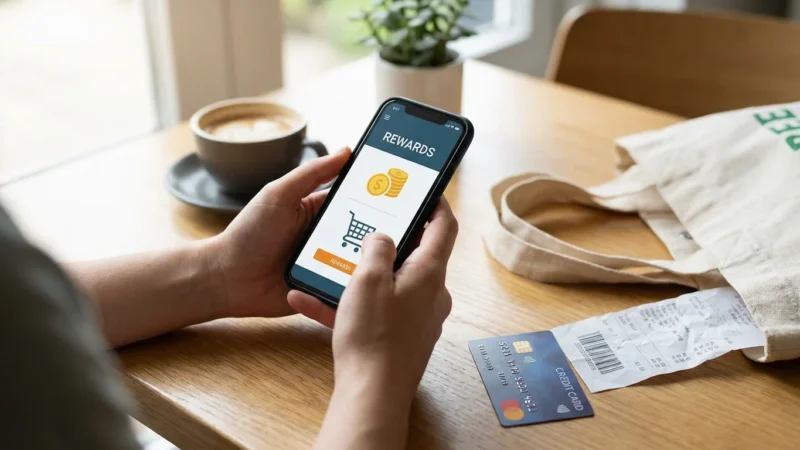
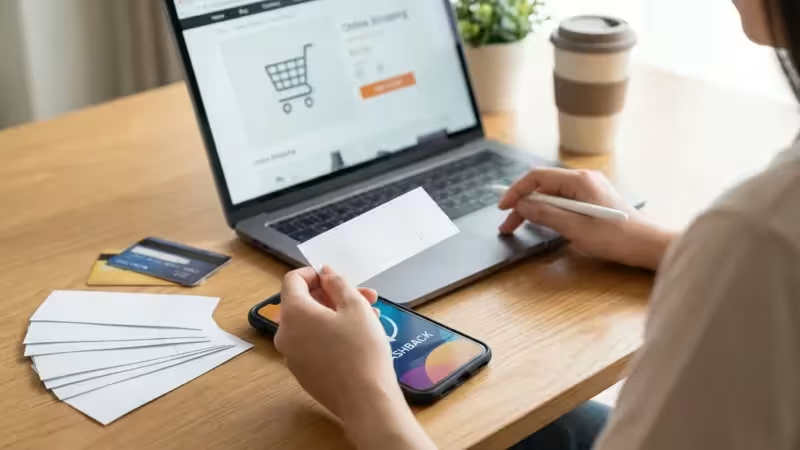
Don’t forget to use cashback apps in conjunction with these coupons to maximize your savings on every transaction.
Learning how to stack coupons and sales across different platforms is a key skill for any strategic shopper.
These coupons often stack with Subscribe & Save discounts. For example, a brand might offer a 20% off coupon for your first subscription order. Combine that with the standard subscription discount, and you could be looking at 35% off your first delivery. Always cancel the subscription after the first delivery if the price jumps back up, but enjoy the initial savings.

Avoiding Scams and Fake Reviews
As Amazon has grown, so has the number of third-party sellers. Not every item sold on Amazon comes from an Amazon warehouse. Some ship directly from third-party sellers, which can complicate returns and quality control.
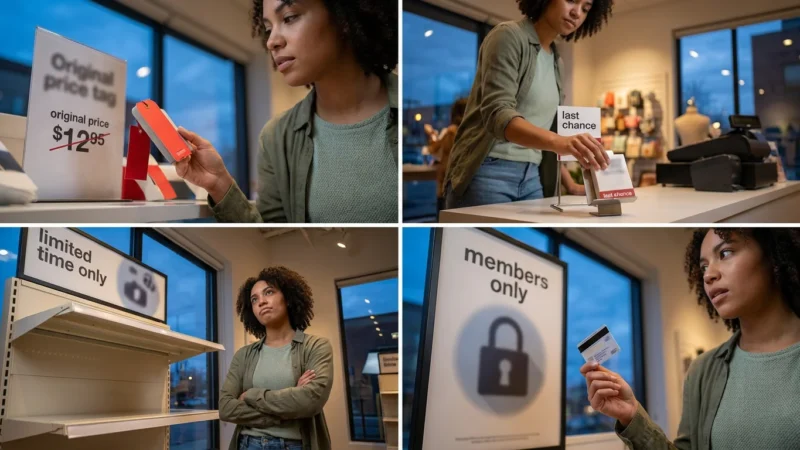
Developing a healthy skepticism and understanding the psychology of sales will keep you from impulse buying based on false ‘limited time’ offers.
Knowing how to spot a fake sale will protect you from algorithms that inflate original prices to create a false sense of urgency.
Spotting Fake Reviews
The Federal Trade Commission (FTC) has increasingly cracked down on deceptive review practices, but fake reviews still exist. If a product has thousands of five-star reviews but the written comments are generic (“Good item,” “Fast shipping”) or refer to a completely different product, be suspicious. Use browser extensions like Fakespot to analyze the review reliability. These tools grade the quality of the reviews to help you determine if the 4.5-star rating is legitimate or manipulated.
Sold by vs. Ships from
Look at the “Buy Box” on the right side of the screen.
- Sold by Amazon, Ships from Amazon: The safest bet.
- Sold by Third-Party, Ships from Amazon: Generally safe; returns are handled by Amazon.
- Sold by Third-Party, Ships from Third-Party: Proceed with caution. Returns may require you to pay postage, and shipping times are not guaranteed by Prime.
If you encounter a scam or a product that never arrives, you have protections. The CFPB notes that credit cards offer strong fraud protection under the Fair Credit Billing Act, allowing you to dispute charges for goods not received.

When to Consult a Financial Professional
While shopping hacks can save you money on daily purchases, they are not a substitute for comprehensive financial planning. There are specific times when DIY money management hits a ceiling.
You should consider seeking professional help if:
- Shopping feels compulsive: If you find yourself shopping on Amazon to cope with emotions, or if you hide packages from family members, this may be a sign of a spending addiction.
- Debt is unmanageable: If you are using credit cards to buy necessities on Amazon and cannot pay the balance in full at the end of the month.
- You are experiencing a major life change: Marriage, divorce, inheritance, or retirement significantly alters your financial landscape.
- You cannot stick to a budget: If you consistently spend more than you earn despite trying various budgeting methods.
For personalized investment advice, look for a Certified Financial Planner (CFP). If you are struggling with debt, legitimate non-profit help is available. The National Foundation for Credit Counseling (NFCC) provides access to certified credit counselors who can help you create a debt management plan.
Frequently Asked Questions
Is it safe to buy “Renewed” electronics on Amazon?
Generally, yes. Amazon Renewed products are inspected and tested by qualified suppliers to work and look like new. They come with the Amazon Renewed Guarantee, which typically gives you 90 days to return the item if you are not satisfied. This is a longer return window than standard purchases.
Does leaving items in my cart trigger a discount?
This is a classic internet rumor that used to work more often than it does now. While some sellers may send a “come back” coupon if you abandon your cart, it is not a guaranteed strategy. However, moving items to your “Saved for Later” list allows you to easily see price changes every time you open your cart.
How do I know if I am getting the absolute lowest price?
You cannot know for certain without a tool. Use a price history tracker like Keepa or CamelCamelCamel. If the current price matches the lowest price recorded in the last year, you can be confident you are getting a good deal.
When should I consult a professional about my spending?
If your Amazon spending is causing you to miss bill payments, carry high-interest credit card debt, or causes conflict in your relationships, you should consult a financial therapist or a credit counselor. The National Foundation for Credit Counseling is a trusted resource for debt assistance.
What are the risks of using third-party sellers?
The main risks include longer shipping times, difficult return processes, and the potential for counterfeit goods. Always check the seller’s feedback rating. If a deal looks too good to be true from a seller with zero feedback or a name that is a random string of letters, avoid it.
Can I share my Prime benefits with friends?
Amazon Household allows you to share benefits with one other adult in your household (plus teens/children). You must agree to share payment methods to link accounts. Sharing your password with friends outside your household violates Amazon’s terms of service and can get your account banned.
What should I do if a package is stolen?
First, check with neighbors. If it is truly gone, contact Amazon Customer Service immediately. They are usually very responsive regarding lost packages. For high-value items, consider using an Amazon Locker for secure delivery. You can also file a police report, which USA.gov notes may be necessary for certain insurance claims or extended fraud investigations.
Last updated: January 2026. Information accurate as of publication date. Financial regulations, rates, and programs change frequently—verify current details with official sources.
This article was reviewed for accuracy by our editorial team.
For trusted financial guidance, visit
Money.com, Consumer Financial Protection Bureau (CFPB), Internal Revenue Service (IRS), Social Security Administration (SSA) and Federal Trade Commission (FTC).
Important: EasyMoneyPlace.com provides educational content only. We are not licensed financial advisors, tax professionals, or registered investment advisers. This content does not constitute personalized financial, tax, or legal advice. Laws and regulations change frequently—verify current information with official sources.
Disclaimer: This article is for informational purposes only and does not constitute financial, tax, or legal advice. Individual financial situations vary, and we encourage readers to consult with qualified professionals for personalized guidance. For those experiencing financial hardship, free counseling is available through the National Foundation for Credit Counseling.






Leave a Reply