
Managing debt often feels like juggling flaming torches. You have multiple due dates, varying interest rates, and different login credentials for every credit card or loan. If you miss one catch, you get burned by late fees and credit score drops. This is why many Americans turn to debt consolidation loans—a strategy designed to turn that chaotic juggling act into a single, manageable motion.
Before committing to a new loan, it is helpful to recognize the 10 signs you have too much debt to ensure you are choosing the right recovery path.
However, debt consolidation is not a magic wand. While it can lower your interest rates and simplify your life, it also carries risks that can leave you in a deeper financial hole if you aren’t careful. This guide cuts through the marketing noise to give you the honest facts, helping you decide if this financial tool is the right fit for your unique situation.
You have the power to change your financial future. Whether you choose a consolidation loan, a balance transfer, or a strategic payoff plan, the most important step is the one you are taking right now: educating yourself.

Key Takeaways
- Simplification is key: Consolidation combines multiple debts into one monthly payment with a single interest rate and due date.
- Interest rates matter: The primary financial goal is to secure a loan with a significantly lower Annual Percentage Rate (APR) than your current credit cards.
- Watch for hidden costs: Origination fees and extended loan terms can sometimes cost you more in the long run, even if your monthly payment drops.
- Behavioral change is required: A loan solves the math problem, but not the spending problem. Without a budget, many people run up their credit card balances again.
- Alternatives exist: Balance transfer cards, Debt Management Plans (DMPs), and the debt snowball method are viable options depending on your credit score and discipline.
Audience Scope: This guide is for U.S. residents dealing with unsecured consumer debt (credit cards, medical bills, personal loans). If you have complex circumstances such as business ownership, high net worth, international assets, or are facing imminent bankruptcy, we recommend consulting with a qualified financial professional.
For those managing high debt levels with limited resources, understanding how to get out of debt on a low income provides specialized strategies for recovery.
What Is Debt Consolidation?
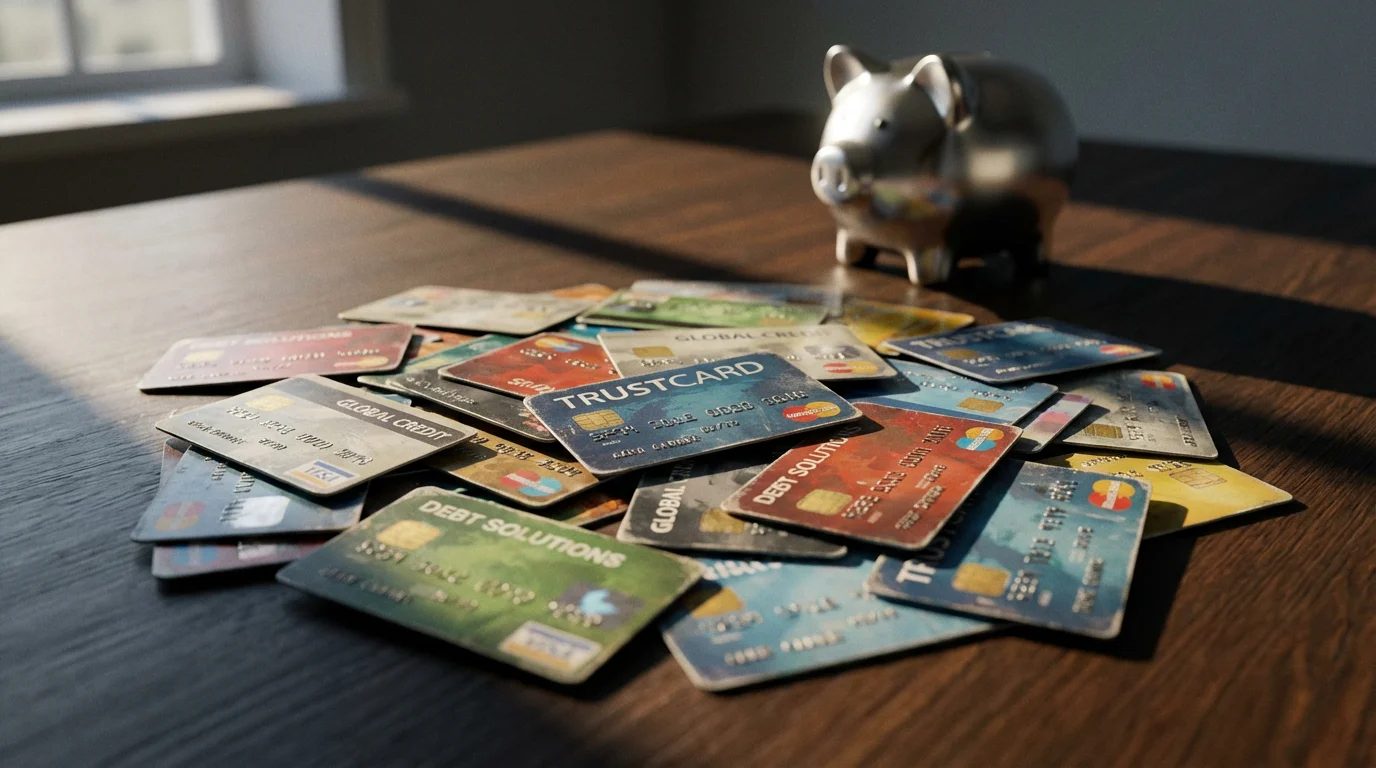
At its core, debt consolidation is the process of taking out a new loan to pay off a variety of existing liabilities and consumer debts. By doing this, you combine multiple monthly payments into a single payment. Ideally, this new loan offers a lower interest rate than your existing debts, which helps you pay down the principal balance faster.
According to the Consumer Financial Protection Bureau (CFPB), consolidation can be a helpful tool for consumers overwhelmed by high-interest credit card debt, provided the new terms are favorable. It is distinct from debt settlement, which involves negotiating with creditors to pay less than you owe—a process that significantly damages your credit score.

How Debt Consolidation Loans Work
The mechanics of a debt consolidation loan are straightforward. Once you apply and are approved for the loan, the lender will either send the funds directly to your creditors to pay off your balances, or they will deposit the cash into your bank account, trusting you to pay off the debts yourself.
There are two primary types of loans you might use for this purpose:
- Unsecured Personal Loans: These are based primarily on your creditworthiness and income. You do not need to put up collateral (like your house or car). Because the lender is taking on more risk, interest rates are generally higher than secured loans but often lower than credit cards.
- Secured Loans: These require collateral, such as a home equity loan or a 401(k) loan. While these often boast lower interest rates, the risk is much higher for you. If you default on the payments, you could lose your home or damage your retirement security.

The Pros: Why People Consolidate
When used correctly, a debt consolidation loan offers several tangible benefits that can accelerate your journey to financial freedom.
While consolidation simplifies things, you still need a clear debt payoff plan to ensure you reach the finish line.
1. Lower Interest Rates
The most compelling reason to consolidate is to reduce the cost of borrowing. If you are carrying credit card debt with APRs ranging from 20% to 29%, qualifying for a personal loan at 10% to 15% can save you thousands of dollars in interest charges.
2. Simplified Finances
Psychological stress is a real component of debt. Tracking five different due dates and minimum payments drains your mental energy. Consolidating reduces this to one payment to one lender, reducing the likelihood of missing a payment due to forgetfulness.
3. Fixed Repayment Timeline
Credit cards are “revolving” debt; you can pay the minimum for decades and barely make a dent in the principal. A consolidation loan is “installment” debt. It has a fixed term—usually 3 to 5 years. You know exactly when you will be debt-free if you make every payment on time.
4. Potential Credit Score Boost
Paying off revolving credit card balances lowers your credit utilization ratio, which is a major factor in credit scoring models. Although the new loan inquiry (hard pull) may cause a small, temporary dip, the reduction in credit card utilization often results in a net positive for your score over time.

The Cons: Risks You Need to Know
While the benefits are attractive, debt consolidation is not without its dangers. It is vital to approach this strategy with your eyes open.
Understanding the reality of your situation often means debunking common debt myths that can derail your progress.
1. Upfront Costs and Fees
Many personal loans come with “origination fees,” which are deducted from the loan amount before you receive it. These fees typically range from 1% to 8% of the loan amount. You must factor this cost into your calculations to ensure the loan is truly cheaper than your current debt.
2. The Risk of “Reloading”
This is the most dangerous trap. You pay off your credit cards with the loan, and suddenly, you have zero balances and available credit limits. If you haven’t fixed the spending habits that got you into debt, you might start using those cards again. You could end up with a consolidation loan payment plus new credit card payments—a situation often called “double-dipping.”
3. Paying More Over Time
If you extend the repayment term significantly to lower your monthly payment, you might end up paying more in total interest, even with a lower rate. We will explore the math behind this in the next section.
The Federal Trade Commission (FTC) warns consumers to be wary of companies that guarantee they can make debt go away easily. Legitimate consolidation involves a new loan that you must repay in full.

Does Debt Consolidation Actually Save You Money?
Lowering your monthly payment does not always mean you are saving money. To determine if a loan is a good deal, you must look at the total cost of borrowing.
Let’s look at a concrete example. Assume you have $15,000 in credit card debt with an average interest rate of 22%. You are currently paying $450/month.
| Scenario | Interest Rate (APR) | Monthly Payment | Time to Pay Off | Total Interest Paid |
|---|---|---|---|---|
| Current Situation | 22% | $450 | ~4.5 Years | $8,300+ |
| Good Consolidation | 12% | $498 (3-year term) | 3 Years | $2,946 |
| Bad Consolidation | 16% | $325 (6-year term) | 6 Years | $8,400+ |
Analysis: In the “Good Consolidation” scenario, you increase your payment slightly but save over $5,000 in interest and finish 1.5 years earlier. In the “Bad Consolidation” scenario, you lower your monthly payment to $325, which feels good today, but you actually pay more total interest than if you had done nothing.

Step-by-Step Guide to Consolidating
If the math works in your favor, follow these steps to secure a loan safely.
Once you have successfully paid off your high-interest balances, learning how to rebuild your credit is the next logical step toward financial health.
- Check Your Credit Score: Your score determines the rate you will get. You can check your score for free through many banking apps or by using resources recommended by USA.gov.
- List Your Debts: Tally exactly how much you owe and the current APR for each account. You need a loan large enough to cover these balances.
- Shop Around (Prequalify): Most online lenders allow you to “prequalify” with a soft credit check, which does not hurt your score. Compare rates from at least three different lenders (credit unions, online lenders, and traditional banks).
- Read the Fine Print: Look specifically for “Origination Fees” and “Prepayment Penalties.” Avoid loans that charge you extra for paying off the debt early.
- Apply and Pay Off: Once approved, if the lender does not pay your creditors directly, transfer the funds immediately to your credit card accounts. Do not let that cash sit in your checking account where it might get spent on other things.

Top Alternatives to Debt Consolidation Loans
A personal loan isn’t the only way to tackle debt. Depending on your credit score and discipline, one of these alternatives might be superior.
1. Balance Transfer Credit Cards
If you have a good credit score (typically 670+), you might qualify for a credit card offering 0% APR on balance transfers for 12 to 21 months.
Pros: You pay zero interest during the promotional period.
Cons: There is usually a balance transfer fee (3% to 5%), and if you don’t finish paying it off before the promo ends, the interest rate skyrockets.
2. Debt Management Plans (DMP)
Nonprofit credit counseling agencies can negotiate with your creditors to lower interest rates and waive fees without you taking out a new loan. You make one payment to the agency, and they distribute it to creditors.
Pros: No new loan required; professional guidance.
Cons: You usually have to close your credit cards, which is necessary but can feel restrictive.
According to the National Foundation for Credit Counseling (NFCC), a DMP can reduce total payments and help consumers become debt-free in 3 to 5 years.
3. The Debt Snowball or Avalanche (DIY)
You don’t need a new product to get out of debt; you just need a plan.
Snowball: Pay minimums on everything, then throw all extra money at the smallest balance first. This builds momentum.
Avalanche: Pay minimums on everything, then throw all extra money at the highest interest rate first. This saves the most money mathematically.

Common Pitfalls to Avoid
Even with the best intentions, borrowers often stumble. Watch out for these common mistakes:
Addressing underlying budgeting mistakes is essential to ensure that your consolidated loan leads to long-term financial stability.
Breaking the cycle of borrowing requires a mindset shift; once your balances are cleared, focus on how to stay debt-free after paying off your loans to maintain your financial freedom.
- Consolidating without a budget: If you don’t track where your money goes, a loan is just a temporary patch on a leaking tire.
- Using home equity blindly: Turning unsecured credit card debt into debt secured by your home (HELOC) puts your house at risk of foreclosure if you can’t make payments.
- ignoring the root cause: Was your debt caused by an emergency (medical bill, job loss) or lifestyle choices? If it is lifestyle, you must address your spending habits before consolidating.
Experts at Investopedia note that one of the biggest risks of debt consolidation is the illusion of wealth—feeling like you have “extra” money because your monthly payment dropped, leading to more spending.

When to Consult a Financial Professional
Sometimes, DIY methods or simple consolidation loans aren’t enough. You should seek professional help if:
- Your debt exceeds 50% of your gross income. At this level, you may need more aggressive intervention than a simple loan.
- You are unable to make minimum payments. If you are already falling behind, a consolidation loan (which requires good credit) may not be an option.
- You are receiving calls from debt collectors or legal threats.
- You are considering tapping into retirement funds to pay debt. Always talk to a CPA or financial planner before touching protected retirement assets.
You can find qualified help through the National Foundation for Credit Counseling or find a fee-only planner via the Certified Financial Planner Board.
Frequently Asked Questions
Does debt consolidation hurt my credit score?
Initially, you may see a small drop (typically less than 10 points) due to the hard inquiry when applying for the loan. However, as you pay off your revolving credit card balances, your credit utilization ratio improves, which often raises your score significantly over the following months—provided you make your loan payments on time.
Can I get a consolidation loan with bad credit?
Yes, but it is more difficult and expensive. Lenders view bad credit as high risk, so you may face APRs of 25% to 35%, which defeats the purpose of consolidating. In this case, a Debt Management Plan through a nonprofit agency is often a better alternative.
Is it better to settle debt or consolidate it?
Consolidation pays your debt in full, which preserves your credit score. Debt settlement involves negotiating to pay less than you owe. Settlement will stay on your credit report for seven years and significantly hurts your score. Settlement should generally be considered a last resort before bankruptcy.
Can I consolidate student loans with personal loans?
Technically yes, but it is rarely a good idea for federal student loans. By moving federal loans to a private lender, you lose access to government benefits like income-driven repayment plans, forgiveness programs, and deferment options.
When should I consult a professional about this?
If you are unsure whether you can afford the new loan payments, or if your total debt is more than half your annual income, consult a credit counselor immediately. They can provide an objective review of your budget.
What are the risks or limitations?
The primary risk is behavior. If you clear your credit cards and then run up the balances again, you will double your debt load. Additionally, using secured loans (like home equity) to pay off unsecured debt transfers the risk to your assets, meaning you could lose your home if you default.
Last updated: January 2026. Information accurate as of publication date. Financial regulations, rates, and programs change frequently—verify current details with official sources.
This article was reviewed for accuracy by our editorial team.
For trusted financial guidance, visit
Federal Trade Commission (FTC),
Federal Deposit Insurance Corporation (FDIC) and
Securities and Exchange Commission (SEC).
Important: EasyMoneyPlace.com provides educational content only. We are not licensed financial advisors, tax professionals, or registered investment advisers. This content does not constitute personalized financial, tax, or legal advice. Laws and regulations change frequently—verify current information with official sources.
Disclaimer: This article is for informational purposes only and does not constitute financial, tax, or legal advice. Individual financial situations vary, and we encourage readers to consult with qualified professionals for personalized guidance. For those experiencing financial hardship, free counseling is available through the National Foundation for Credit Counseling.








Leave a Reply