
You work hard for your money. Yet, by the end of the month, you might stare at your bank balance and wonder exactly where it all went. If the idea of tracking every penny feels overwhelming, boring, or restrictive, you are not alone. Many people avoid tracking expenses because they fear it requires hours of spreadsheet management or obsessing over every receipt. Fortunately, that old-school mentality is outdated.
Financial awareness does not require a degree in accounting or hours of free time. You can gain complete clarity over your finances in just 15 minutes a week. By building a streamlined, judgment-free routine, you move from wondering where your money went to telling it where to go. This guide shows you how to build a sustainable tracking habit that fits into your real life, helping you spot leaks, save more, and reduce financial anxiety without consuming your weekend.

Key Takeaways
- Consistency Beats Precision: Tracking weekly for 15 minutes is more effective than an occasional, exhausting three-hour session.
- Automation is Essential: Leveraging apps or bank alerts reduces manual data entry, allowing you to focus on analysis rather than typing.
- Categorization Simplifies Decisions: Grouping expenses into broad buckets like “Needs,” “Wants,” and “Savings” makes review faster and more actionable.
- The “No-Judgment” Rule: The goal is awareness, not shame. Viewing data objectively prevents the emotional burnout that causes most people to quit.
- Review Triggers Action: The weekly review isn’t just about looking at the past; it allows you to adjust your behavior for the upcoming week.
Audience Scope: This guide is for U.S. residents seeking to manage personal or household finances. If you have complex circumstances such as business ownership, high net worth, international assets, or complicated tax situations, we recommend consulting with a qualified financial professional.
To set a strong foundation before you begin tracking, consider following our guide on budgeting for beginners to navigate your first 30 days.

Why the 15-Minute Method Works
Most people fail at expense tracking because they aim for perfection rather than sustainability. They try to log every transaction the second it happens, which interrupts their day and feels like a chore. Eventually, they miss a few days, feel guilty, and abandon the system entirely.
This streamlined routine is even more powerful when you have already created a monthly budget that reflects your true cost of living.
The 15-minute weekly method works because it relies on “batching.” Instead of letting finances distract you daily, you dedicate a specific, short block of time to handle it all at once. This approach shifts your mindset from reactive to proactive. According to the Consumer Financial Protection Bureau (CFPB), financial well-being is defined by having control over day-to-day finances and the capacity to absorb a financial shock. A weekly check-in provides that control without dominating your life.
When you limit the time investment, you force yourself to focus on what matters: the big picture. You stop worrying about a 50-cent discrepancy and start noticing that you spent $200 on dining out this week when you planned for $50.

Choosing the Right Tools for Speed
To hit the 15-minute mark, your tools must do the heavy lifting. If you are manually writing down every transaction from memory, you will likely fail. The best tool is the one you will actually use, but automation significantly speeds up the process.
Option 1: Aggregator Apps (Fastest)
Modern budgeting apps sync securely with your bank accounts and credit cards. They automatically import transactions and attempt to categorize them for you. Your job is simply to review and correct the categories. This cuts data entry time to near zero.
Option 2: Spreadsheets (Most Customizable)
If you prefer control and privacy, a spreadsheet (Excel or Google Sheets) is excellent. To keep this fast, download a CSV file from your bank’s website once a week and paste it into your sheet. Avoid typing data manually.
Option 3: The Manual Ledger (Best for Awareness)
For some, writing things down reinforces the “pain” of spending. If you choose this route, you must collect receipts throughout the week or review your banking app’s history during your 15-minute session. This method is slower but can be very effective for curbing impulse buys.
According to Investopedia, the most effective tracking method is one that aligns with your personal habits and organizational style. Don’t force yourself to use an app if you love notebooks, but understand the trade-off in time.
| Method | Time Required | Pros | Cons |
|---|---|---|---|
| Budgeting Apps | 5-10 Minutes | Automatic import, visual charts, mobile alerts. | May require subscription fees; requires bank linking. |
| Spreadsheet | 15-20 Minutes | Free, fully customizable, data privacy. | Requires formula knowledge; manual export/import needed. |
| Pen & Paper | 20+ Minutes | High psychological impact; simple. | Time-consuming; easy to lose data; no math automation. |

The Step-by-Step Weekly Routine
You need a specific “money date.” Choose a time when you are unlikely to be interrupted—Friday mornings before work or Sunday evenings are popular choices. Set a timer for 15 minutes to keep yourself focused.
Minutes 1-3: Gather and Import
Open your tracking tool. If you use an app, refresh the connection to ensure all transactions from the last seven days are visible. If you use a spreadsheet, log in to your bank portal, view activity for the week, and copy the data. If you use paper, grab your wallet and open your banking app on your phone to reference recent purchases.
Minutes 4-10: Categorize and Tag
Go through the list of transactions. Your goal is to assign every expense a home. Was that Amazon purchase for “Household” or “Gifts”? Was the gas station charge for “Fuel” or “Snacks”?
Move quickly. If you don’t recall exactly what a $12 purchase at Target was, categorize it as “Household” and move on. Getting stuck on small mysteries wastes time. If you see a transaction you don’t recognize at all, flag it immediately—this is how you catch fraud early.
Minutes 11-15: Review and Reflect
This is the most critical step. Look at the totals. Ask yourself three questions:
- Did I spend more than I planned this week?
- Which category is higher than expected?
- What upcoming expenses do I need to prepare for next week?
This brief reflection allows you to course-correct. If you overspent on dining out this week, you can consciously decide to cook at home next week to balance the budget.
“The goal isn’t to never spend money. The goal is to ensure your spending aligns with your values and goals.”

Categorizing Without Complication
Over-complicating categories is a major reason people quit tracking. You do not need separate lines for “Coffee,” “Fast Food,” “Fine Dining,” and “Work Lunches.” A single category called “Dining Out” is sufficient.
The 50/30/20 Rule as a Baseline
A simple way to group expenses is the 50/30/20 framework, often recommended by experts at NerdWallet and other financial hubs.
- Needs (50%): Housing, utilities, groceries, insurance, minimum debt payments.
- Wants (30%): Dining out, entertainment, subscriptions, hobbies.
- Savings/Debt (20%): Emergency fund contributions, retirement investing, extra debt payoff.
When you are tracking rapidly, you might only need 5 to 10 active categories. Common streamlined categories include:
- Housing & Utilities (Rent/Mortgage, Electric, Water, Internet)
- Transportation (Car payment, Gas, Insurance, Uber/Bus)
- Food (Groceries and Dining Out—or separate these two if food is a problem area)
- Personal/Lifestyle (Shopping, Gym, Subscriptions)
- Medical/Health
- Savings Transfers
Keep it simple. You can always add more granularity later if you need to investigate a specific problem area.

Identifying and Plugging Money Leaks
Once you are tracking consistently, you will likely spot “money leaks.” These are small, recurring expenses that drain your bank account without you noticing. The Federal Trade Commission (FTC) suggests that reviewing bank statements regularly is the primary way to catch subscription creep and unauthorized charges.
Common Leaks to Watch For:
- Zombie Subscriptions: Streaming services, apps, or gym memberships you no longer use.
- The “Latte Factor”: Frequent small convenience purchases (coffee, snacks, convenience store runs) that add up to hundreds of dollars a month.
- Bank Fees: Monthly maintenance fees or ATM fees. (If you see these, switch banks).
- Impulse Upgrades: Adding expedited shipping or upgrading a service tier unnecessarily.
When you spot a leak during your 15-minute review, take action immediately. Cancel the subscription right then, or make a note to call the bank on Monday. The power of tracking lies in the immediate awareness it provides.

Handling Cash, Venmo, and Split Bills
Digital transactions are easy to track because they leave a paper trail. Cash and peer-to-peer apps like Venmo or Cash App are trickier and often act as “black holes” in a budget.
The Cash Solution
If you withdraw $100 cash, you have two options:
- Track the Withdrawal: Categorize the $100 withdrawal immediately as “spending money” or “entertainment.” Assume it is gone. This is the fastest method.
- Track the Receipts: Keep every receipt and log them individually. This is more accurate but takes more time. For a 15-minute routine, option 1 is usually better.
Venmo and Digital Wallets
Peer-to-peer payments can be confusing. If you pay for dinner ($50) and a friend Venmos you their half ($25), your bank account shows a $50 expense and a $25 income. This can mess up your totals.
Treat the reimbursement as a “negative expense” in your tracking category rather than income. For example, log the dinner as $50 in “Dining Out,” and log the Venmo repayment as -$25 in “Dining Out.” The net result is $25 spent, which accurately reflects reality. Apps like Mint or YNAB often handle this well, but you must keep an eye on it.
Common Pitfalls to Avoid
Even with a streamlined system, you might face hurdles. Anticipating them helps you stay on track.
Reviewing common budgeting mistakes can help you navigate the psychological barriers that often make tracking feel difficult.
1. The “Missed Week” Shame Spiral
You miss one week, then two. Suddenly, you have a month of untracked data. You feel overwhelmed, so you stop entirely.
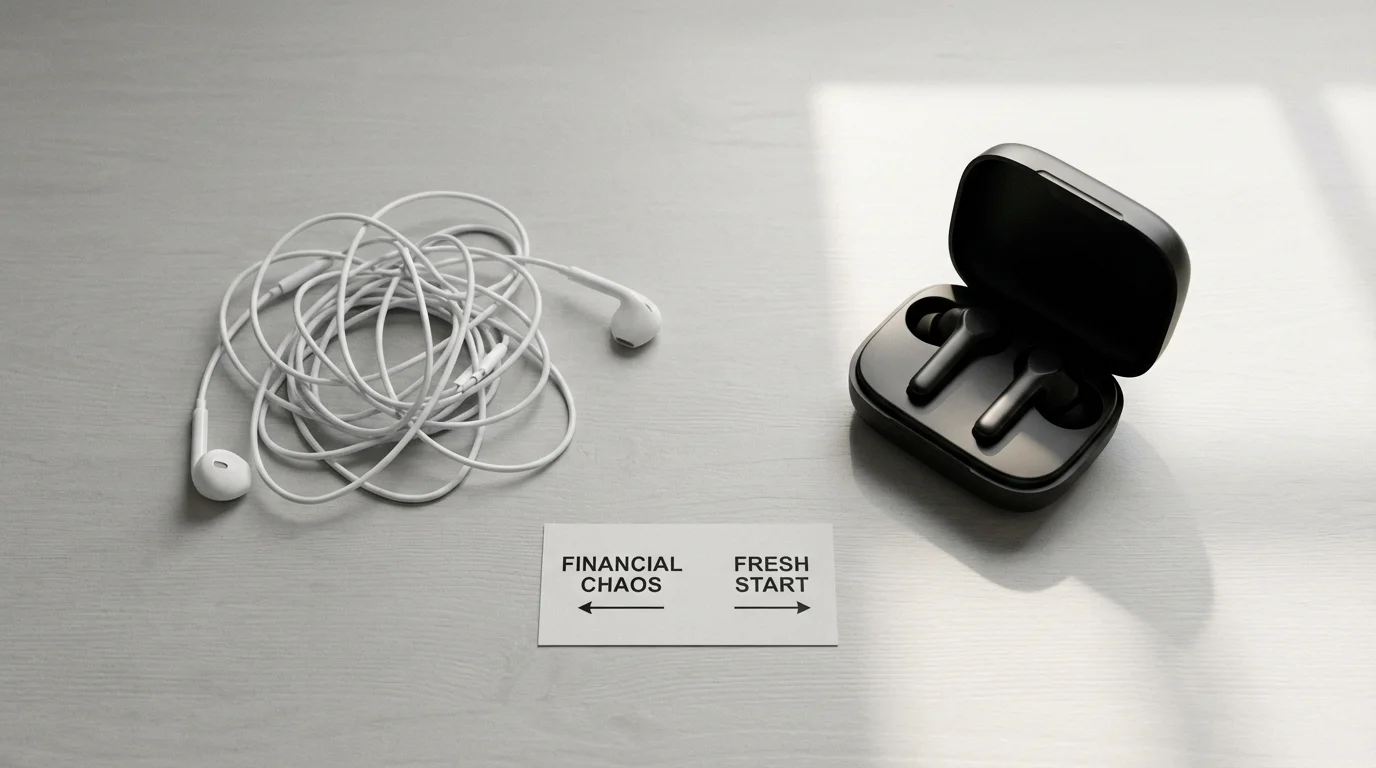
The Fix: If you miss a week, do not try to catch up on every single transaction. Simply check your current account balance, ensure no fraud occurred, and start fresh from today. A “fresh start” is better than quitting.
2. Obsessing Over Pennies
Spending 20 minutes looking for a 45-cent discrepancy is a waste of life.
The Fix: Create a category called “Misc” or “Adjustment.” If your numbers are off by a few dollars, dump the difference there and move on.
3. Tracking Without Changing
You track every penny but still overspend. This happens when you treat tracking as a history lesson rather than a tool for change.
The Fix: Use the final 5 minutes of your session to set an intention. “I spent too much on groceries this week, so next week I will meal plan to lower that number.”

When to Consult a Financial Professional
Tracking your spending is a powerful DIY step, but some situations require expert guidance. If your 15-minute reviews reveal deeper issues, it may be time to call in a pro.
- Overwhelming Debt: If your expenses consistently exceed your income and you are relying on credit cards to pay bills, consider contacting a credit counselor. The National Foundation for Credit Counseling (NFCC) offers low-cost or free advice for managing debt crises.
- Complex Income Sources: If you run a business, have freelance income with tax implications, or manage rental properties, a CPA (Certified Public Accountant) can help separate business and personal expenses effectively.
- Investment Planning: Spending trackers help you find money to save, but they don’t tell you how to invest it. For retirement planning and wealth management, a Certified Financial Planner (CFP) is the gold standard. You can verify credentials at the CFP Board.
- Divorce or Estate Issues: Legal and financial entanglements during major life transitions often require objective, professional oversight to ensure assets are divided or managed correctly.
Frequently Asked Questions
Is it safe to link my bank account to a budgeting app?
Generally, yes. Most reputable budgeting apps use bank-level encryption and read-only access, meaning they can see your data but cannot move your money. However, you should always check the app’s security protocols and ensure they use multi-factor authentication. Agencies like the FDIC provide guidelines on safe mobile banking practices.
What is the best day to track expenses?
There is no single “best” day, but Friday mornings or Sundays work well for most. Friday allows you to see what you have left for the weekend, while Sunday allows you to review the full week and prepare for the next one.
What if I use credit cards for everything?
Using credit cards is fine (and can earn rewards), provided you pay them off in full every month. When tracking, treat a credit card swipe exactly like cash leaving your checking account. Log the expense when you make the purchase, not when you pay the credit card bill.
When should I consult a professional about my spending?
If you find yourself unable to cover basic necessities (housing, food, utilities), if you are using debt to pay off other debt, or if financial stress is affecting your health or relationships, you should seek help immediately. Nonprofit credit counselors can offer solutions that budgeting apps cannot.
What are the risks or limitations of expense tracking?
The main risk is “analysis paralysis,” where you spend so much time tracking that you become anxious about spending any money at all. Tracking should empower you to spend on what you love, not make you afraid to buy groceries. Additionally, automated apps sometimes miscategorize transactions, so blind trust in the software can lead to inaccurate data.
Should I track gross or net income?
For a weekly spending tracker, focus on net income (take-home pay). This is the actual cash landing in your bank account that you have available to spend. Your gross income is relevant for tax planning, but your net income is what matters for the grocery store.
Can I track spending if I have irregular income?
Yes, tracking is even more important for freelancers or gig workers. In this case, your focus during the 15-minute review should be on keeping your “Needs” expenses lower than your lowest projected income month. This helps you build a buffer for lean months.
Last updated: January 2026. Information accurate as of publication date. Financial regulations, rates, and programs change frequently—verify current details with official sources.
This article was reviewed for accuracy by our editorial team.
For trusted financial guidance, visit Bankrate, Consumer Reports, and The Balance.
Important: EasyMoneyPlace.com provides educational content only. We are not licensed financial advisors, tax professionals, or registered investment advisers. This content does not constitute personalized financial, tax, or legal advice. Laws and regulations change frequently—verify current information with official sources.
Disclaimer: This article is for informational purposes only and does not constitute financial, tax, or legal advice. Individual financial situations vary, and we encourage readers to consult with qualified professionals for personalized guidance. For those experiencing financial hardship, free counseling is available through the National Foundation for Credit Counseling.









Leave a Reply