
For most Americans, the weekly trip to the supermarket has become a source of stress rather than a routine chore. Prices on essentials—from eggs to milk to fresh produce—have fluctuated wildly, leaving many families wondering how to keep nutritious food on the table without blowing their entire monthly budget. While extreme couponing makes for entertaining television, it is rarely a practical solution for busy parents, working professionals, or anyone who values their time.
You do not need a binder full of paper clippings or hours of free time to significantly reduce your grocery bill. By changing how you shop rather than just what you buy, you can unlock substantial savings. This guide focuses on structural changes to your shopping habits, strategic planning, and understanding the psychology behind supermarket layouts.
Audience Scope: This guide is for U.S. residents and households managing a standard personal or family budget. It addresses everyday grocery spending. If you are experiencing severe food insecurity or require government assistance, or if you manage commercial food procurement, we recommend consulting with social services or a business financial advisor.

Key Takeaways
- Unit pricing is superior to sale tags: Learning to read the price per ounce or pound will save you more money than chasing “2-for-1” deals.
- Inventory prevents overbuying: Shopping your pantry and freezer before leaving the house eliminates duplicate purchases and reduces waste.
- Store brands are the silent savers: Private label products are often manufactured in the same facilities as name brands, costing 20–30% less.
- The perimeter holds the health (and often the cost) advantage: Processed foods in the center aisles usually have higher markups than whole ingredients found on the outer edges.
- Behavioral changes outlast discounts: avoiding shopping while hungry and sticking to a list are the most effective tools against impulse spending.
Step 1: The “Shop Your House” Audit
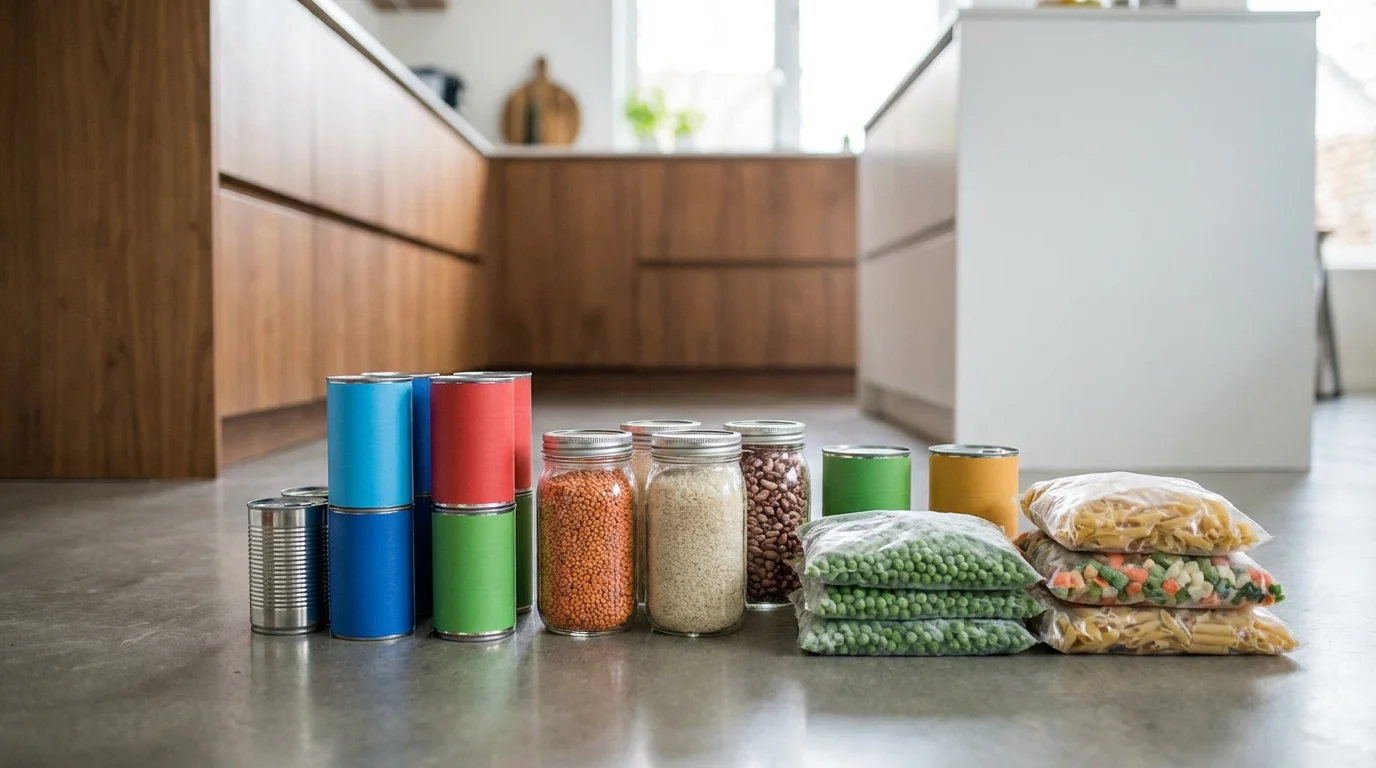
The most expensive food you buy is the food you already own but forget to eat. Before you even think about driving to the store, you need to conduct a thorough inventory of your current stock. Many households sit on hundreds of dollars of “sunk costs” in their freezers and pantries.
Start by pulling everything out of your pantry and freezer. Group items by category: grains, canned goods, proteins, and baking supplies. You might find you have enough pasta for three meals or a bag of frozen chicken that got buried under ice cream. This inventory becomes the foundation of your grocery list for the week. If you have rice, beans, and frozen corn, you already have the base for a burrito bowl night—you only need to buy fresh toppings.
According to the Consumer Financial Protection Bureau (CFPB), creating a spending plan (or budget) is the first step to financial security. Applying this concept to your pantry—treating your existing food as “money in the bank”—prevents you from spending cash on things you already have.

Step 2: Realistic Meal Planning
Meal planning often fails because people plan for an idealized version of their week rather than their actual reality. If you know you work late on Tuesdays, planning a meal that requires an hour of prep time is a setup for failure. That is when you end up ordering takeout, wasting the groceries you bought.
Mastering your food costs is a critical component of breaking the paycheck-to-paycheck cycle and regaining control of your finances.
The “Theme Night” Shortcut
To reduce decision fatigue, assign themes to days of the week. This simplifies the shopping list and allows you to buy ingredients that overlap.
- Meatless Monday: Saves money on expensive proteins.
- Taco Tuesday: Uses versatile ingredients (tortillas, cheese, salsa) that keep well.
- Leftover Thursday: Clears the fridge before trash day.
“A budget is telling your money where to go instead of wondering where it went.” — Dave Ramsey
When you plan meals based on ingredients you share across recipes, you reduce waste. For example, if you buy a bunch of celery for a soup on Monday, plan a stir-fry for Wednesday that also uses celery so the remainder doesn’t rot in the crisper drawer.

Step 3: Mastering Unit Pricing
Supermarkets are designed to confuse you with colorful “Sale” tags and bulk deals that aren’t actually deals. The only number on the shelf tag that matters is the unit price. This is usually listed in small print in the corner of the shelf tag, showing the cost per ounce, pound, or count.
While supermarket prices are usually firm, learning how to negotiate prices on larger household purchases can save you even more than a grocery sale.
Applying these simple math checks to your routine is one of several painless ways to save money without sacrificing the quality of your meals.
Manufacturers often use “shrinkflation”—reducing the size of the package while keeping the price the same—to hide inflation. Unit pricing cuts through this trick. A “Family Size” box of cereal might look like a deal at $6.00, but if it costs $0.24 per ounce while the smaller box on sale costs $0.18 per ounce, the smaller box is the better financial choice.
Price Comparison Example
Here is a realistic look at how unit pricing reveals the true cost of goods:
| Product | Retail Price | Size | Unit Price (The Real Cost) | Verdict |
|---|---|---|---|---|
| Brand A Ketchup | $4.99 | 32 oz | $0.15 / oz | Expensive |
| Brand B Ketchup (Sale) | $2.50 | 20 oz | $0.125 / oz | Winner |
| Brand A “Family Size” | $8.00 | 64 oz | $0.125 / oz | Tie (Buy only if you need volume) |
Experts at the Federal Trade Commission (FTC) advise consumers to look closely at these labels to ensure they are getting the value advertised, as package sizing can be deceptive.

Step 4: The Brand Name Myth
One of the easiest ways to slash 20% to 30% off your grocery bill instantly is to switch from name brands to store brands (private labels). Many consumers believe that name brands offer superior quality, but this is often a result of marketing rather than manufacturing.
In many cases, store-brand products are produced in the exact same factories as their name-brand counterparts. The only difference is the label and the price tag. While you may have specific preferences for certain items (like a specific soda or coffee), staples such as flour, sugar, salt, canned beans, frozen vegetables, and cleaning supplies are virtually indistinguishable.
According to extensive testing by Consumer Reports, store brands frequently rival or even outperform name brands in blind taste tests. Making the switch on pantry staples alone can save a family of four hundreds of dollars annually.

Step 5: Beating Supermarket Psychology
Grocery stores are engineered to make you spend money. The layout is not accidental. Understanding these tactics helps you keep your wallet closed.
If you struggle to stay within your limits, try using the envelope budgeting system to allocate a strict cash amount for your weekly grocery run.
If you find yourself frequently straying from your list, you might find that using a cash-only system for groceries provides the discipline needed to avoid shiny end-cap displays.
The Eye-Level Trap
Brands pay premiums to be placed at eye level. Look down to the bottom shelves; that is typically where you will find the generic brands and the best bulk deals.
The Perimeter Strategy
Stick to the outer walls of the store. This is generally where fresh produce, meats, dairy, and bakery items are located. The center aisles are filled with processed, packaged foods which not only tend to be less healthy but also have a higher cost-per-calorie ratio due to manufacturing and packaging costs.
End-Cap Displays
The displays at the end of aisles (end-caps) often feature high-margin items that aren’t actually on sale. They are placed there to trigger impulse buys. Unless the item is on your list and verified as a good price via unit pricing, walk past it.

Step 6: Reducing Food Waste to Save Cash
Buying food at a discount doesn’t help if you throw it away. The average American household wastes a significant portion of the food they buy. This is literally throwing cash into the trash can.
- Store Produce Correctly: Learn which fruits emit ethylene gas (like apples and bananas) and keep them away from sensitive produce (like leafy greens) to prevent premature rotting.
- Use Your Freezer: If you bought meat on sale but won’t eat it within two days, freeze it immediately. Bread, milk, cheese, and even eggs (cracked and beaten) can be frozen.
- Repurpose Leftovers: A roasted chicken on Sunday can become tacos on Monday and soup stock on Tuesday.
Resources from USA.gov emphasize that efficient food utilization is a key component of managing household expenses, especially for those on fixed incomes.

Step 7: The Truth About Bulk Buying
Warehouse clubs and bulk buying can offer incredible savings, but they can also be a budget trap. The math only works if you consume everything you buy.
To get the most out of your storage space, consult our guide on the best time to buy everything to see when seasonal staples are at their lowest prices.
While bulk shopping helps with staples, you can save even more on seasonal kitchen appliances and specialty foods by timing your purchases to match annual sales cycles.
Buy in Bulk: Non-perishables like toilet paper, rice, dried beans, pasta, and canned goods. These items have long shelf lives and low unit costs.
Avoid in Bulk: Perishables like giant tubs of hummus, massive bags of salad greens, or gallon jugs of milk (unless you have a large family that drinks it quickly). If you throw away the last 20% of the container, you have negated the savings.
Common Pitfalls to Avoid
Even the most well-intentioned shoppers fall into traps. Here are the most common mistakes that inflate grocery bills:
Once you have stabilized your grocery spending, you can apply similar tactics to negotiate lower monthly bills for your home services.
- Shopping While Hungry: Research consistently shows that shopping on an empty stomach leads to more impulse purchases, specifically high-calorie, expensive junk food.
- Ignoring Seasonality: Buying strawberries in January is expensive and they likely won’t taste good. Stick to produce that is in season for the best prices and flavor.
- Buying Pre-Cut Produce: You pay a massive “convenience tax” for pre-cut fruit and vegetables. Buying a whole pineapple and cutting it yourself takes five minutes and costs half as much.
- Confusing “Best By” with “Expiration”: “Best by” dates indicate peak quality, not safety. Throwing out food immediately after this date often leads to unnecessary waste.
For more on making smart financial decisions, NerdWallet offers excellent tools and calculators to see how small leaks in your budget add up over time.

When to Consult a Financial Professional
While mastering grocery shopping is a vital skill, sometimes financial stress goes deeper than the checkout line. There are specific times when DIY budgeting isn’t enough, and professional guidance is necessary.
You should consider seeking professional help if:
- You are using credit cards to buy essential food: If you are financing groceries and cannot pay the balance off each month, you are in a debt cycle that requires intervention.
- You face chronic food insecurity: If no amount of budgeting allows you to afford adequate nutrition, you may qualify for assistance programs.
- Your debt payments exceed 40% of your income: This debt-to-income ratio signals financial distress.
- You and your partner cannot agree on spending: A financial counselor can act as a neutral third party to establish a shared plan.
For immediate help with debt management, the National Foundation for Credit Counseling (NFCC) provides access to certified credit counselors who can help you restructure debt and create a livable budget. Furthermore, for investment and long-term planning, verify the credentials of professionals through the Certified Financial Planner Board.
Frequently Asked Questions
Is buying organic worth the extra cost?
This is a personal health and budget decision. If your budget is tight, experts recommend prioritizing standard produce over skipping fruits and vegetables entirely. The nutritional benefits of eating produce generally outweigh the risks of conventional farming. You can focus on buying organic only for the “Dirty Dozen” (items with high pesticide residue like strawberries and spinach) to balance cost and health.
Do cashback apps really save money?
Yes, apps that offer rebates on purchases can save money, but there is a catch. They only save you money if you were already planning to buy that specific item. If you buy a brand-name cookie just to get $0.50 back, you likely spent more than if you had just bought the store brand or skipped the cookies entirely.
When should I consult a professional about my grocery budget?
If you find yourself consistently unable to afford basic nutritional needs despite cutting costs, or if you are relying on high-interest debt to feed your family, you should consult a non-profit credit counselor or a financial advisor immediately.
What are the risks of bulk buying?
The primary risks are storage space limitations and spoilage. Buying in bulk requires cash upfront, which can be difficult for tight weekly budgets. Additionally, if the food goes bad before you eat it, the unit price savings are lost. Ensure you have proper storage containers and freezer space before buying in bulk.
How does inflation affect these strategies?
Inflation makes these strategies even more critical. During high inflation, unit pricing becomes your best defense against “shrinkflation.” Being flexible with your meal plan allows you to pivot away from ingredients that have suddenly spiked in price (like eggs or beef) toward more stable options.
Is it cheaper to shop online or in-store?
It depends. Online shopping often involves delivery fees and tips, which increase costs. However, shopping online removes the temptation of impulse buys and allows you to see your running total in real-time, which can help you stick strictly to your budget. For impulse shoppers, the delivery fee might be less than the cost of the unplanned items they would have bought in-store.
Last updated: January 2026. Information accurate as of publication date. Financial regulations, rates, and programs change frequently—verify current details with official sources.
This article was reviewed for accuracy by our editorial team.
For trusted financial guidance, visit
Federal Deposit Insurance Corporation (FDIC),
Securities and Exchange Commission (SEC),
USA.gov Benefits and
National Credit Union Administration (NCUA).
Important: EasyMoneyPlace.com provides educational content only. We are not licensed financial advisors, tax professionals, or registered investment advisers. This content does not constitute personalized financial, tax, or legal advice. Laws and regulations change frequently—verify current information with official sources.
Disclaimer: This article is for informational purposes only and does not constitute financial, tax, or legal advice. Individual financial situations vary, and we encourage readers to consult with qualified professionals for personalized guidance. For those experiencing financial hardship, free counseling is available through the National Foundation for Credit Counseling.









Leave a Reply