
The gig economy has exploded over the last decade, and for good reason. The promise of food delivery apps like DoorDash, UberEats, and Grubhub is enticing: open an app, pick up food, drop it off, and get paid instantly. For millions of Americans, this flexibility offers a lifeline to pay off debt, build an emergency fund, or simply make ends meet between paychecks.
Many workers find this to be one of the best side hustles for introverts because it allows for high autonomy with minimal customer interaction.
However, the number you see on the screen after a shift is rarely what ends up in your pocket. To make this side hustle truly profitable, you have to treat it like a small business. That means understanding the difference between gross revenue and net profit, mastering the tax implications, and navigating the wear and tear on your vehicle.
This guide cuts through the marketing hype to show you exactly how the pay models work, the hidden costs that eat into your earnings, and the strategies top drivers use to maximize their hourly rate.
Transparency: This article may reference financial products, tools, or services. If you sign up through links on this page, we may earn a commission at no extra cost to you. Our recommendations are based on editorial judgment, not compensation.
Audience Scope: This guide is for U.S. residents looking to supplement their income through gig economy apps. If you have complex tax situations, business ownership structures, or international income, we recommend consulting with a qualified financial professional.

Key Takeaways
- Gross vs. Net: Your “hourly rate” on the app is misleading; your true earnings are what remains after gas, maintenance, and taxes.
- Location Matters: Earnings vary wildly by market; urban centers usually offer higher volume, while suburbs offer easier parking and longer distances.
- Tax Responsibility: You are an independent contractor, meaning no taxes are withheld. You must set aside 25-30% of your earnings for the IRS.
- Strategic Acceptance: The most profitable drivers decline low-paying orders and focus on “dollars per mile” rather than total order value.
- Insurance Gaps: Personal auto insurance policies typically exclude business use, potentially leaving you liable in an accident.

Understanding the Pay Models
Before you can estimate your potential income, you need to understand the mechanics of how these platforms calculate your pay. While DoorDash, UberEats, and Grubhub all have slight variations, the core formula remains consistent across the industry.
If you prefer transporting people instead of food, consider exploring if rideshare driving is worth your time as an alternative income stream.
The Three Pillars of Pay
Your earnings for any given delivery generally consist of three components:
- Base Pay: This is the guaranteed amount the app pays for the time, distance, and desirability of the order. It can range from as low as $2 to upwards of $10 for longer distances.
- Promotions/Peak Pay: During busy times (lunch rush, dinner rush, bad weather, or major sporting events), apps offer incentives. This might look like an extra $1-$3 per delivery or a “Quest” bonus for completing a certain number of trips.
- Tips: This is the wildcard. In many markets, customer tips make up 50% or more of a driver’s total income.
According to Bankrate, understanding the tipping culture in your specific market is often the difference between minimum wage earnings and a lucrative side hustle. Some apps allow customers to tip after delivery, while others encourage upfront tipping. Experienced drivers often look for orders where the tip is likely included upfront to ensure the trip is worth their time.
The Hidden Costs of Delivery
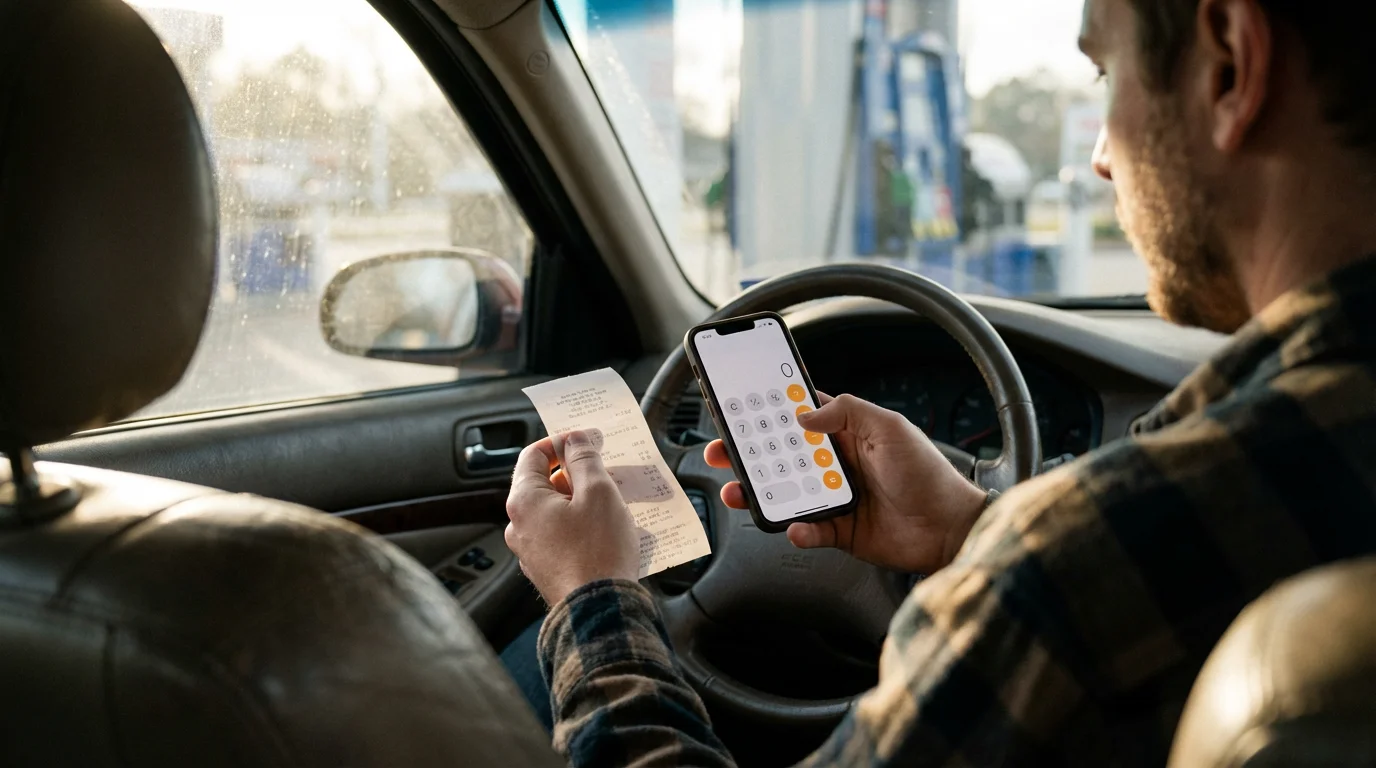
When you see “$100” in your app earnings for the day, you haven’t actually made $100. As an independent contractor, you are the business owner, which means you are responsible for all overhead costs. Ignoring these costs is the most common mistake new drivers make.
To help offset high fuel costs, you might consider how to use cashback apps to save money every time you fill up your tank.
Besides delivery, you can also look into renting out your car to generate passive income while avoiding additional wear and tear.
Gas and Fuel Efficiency
Fuel is your most immediate expense. If you drive a vehicle that gets 20 miles per gallon and gas is $3.50, every mile costs you roughly $0.17 in fuel alone. While that sounds small, a 100-mile shift immediately subtracts $17 from your gross earnings.
Wear and Tear (Depreciation)
Every mile you drive for work puts stress on your vehicle. Tires wear down, oil needs changing, brakes degrade, and the resale value of your car drops. These are “silent” costs because you don’t pay them every day—you pay them in one lump sum when your transmission fails or when you try to sell the car.
The Internal Revenue Service (IRS) recognizes these costs by setting a standard mileage rate for business use of a vehicle. This rate (which changes annually) is designed to cover gas, insurance, wear and tear, and general maintenance. If the IRS estimates that driving a mile costs roughly 65-67 cents, you should take that calculation seriously when evaluating your profit.

Taxes: The Bill That Comes Later
Unlike a W-2 job where your employer withholds taxes from your paycheck, gig apps pay you the full gross amount. This often leads to a nasty surprise during tax season if you haven’t prepared.
Self-Employment Tax
As a gig worker, you are subject to the Self-Employment Tax. This covers Social Security and Medicare taxes. In a traditional job, you pay half, and your employer pays half. As your own boss, you pay both halves—totaling 15.3% of your net earnings.
This is in addition to your standard federal and state income taxes. Financial experts generally recommend setting aside 25% to 30% of every dollar you earn into a separate high-yield savings account to cover these future tax bills.
The Power of Deductions
The good news is that you only pay taxes on your profit, not your total revenue. You can deduct necessary business expenses to lower your taxable income. The largest deduction is usually mileage.
You have two choices for vehicle deductions:
- Standard Mileage Rate: You track every business mile driven and multiply it by the IRS rate. This is the simplest method and often the most beneficial for delivery drivers who rack up high mileage.
- Actual Expenses: You track every receipt for gas, insurance, repairs, and lease payments, then deduct the percentage of costs used for business. This requires meticulous record-keeping.
According to the Internal Revenue Service (IRS), you must maintain a timely log of your miles to claim the standard mileage deduction. Without a log (date, miles, business purpose), the IRS can disallow your deduction during an audit.

Realistic Income Expectations
So, what is the bottom line? While YouTube videos might boast of $40/hour days, those are usually exceptions driven by extreme weather or major holidays.
Earnings also fluctuate by season, similar to how summer side hustles often see different levels of demand compared to the winter months.
Managing these fluctuating earnings effectively requires knowing how to budget on an irregular income so you can still meet your financial goals.
The Average Hourly Range
For most drivers in medium-to-large cities, gross earnings typically fall between $15 and $25 per hour. However, once you factor in gas and vehicle expenses, the net profit often drops to $10 to $18 per hour.
Several factors influence this variance:
- Market Saturation: If there are too many drivers in your area, you will spend more time waiting for orders than driving.
- Time of Day: Dinner rushes (5:00 PM – 9:00 PM) and weekends are consistently the most profitable windows.
- Region: A driver in San Francisco or New York City will see higher gross numbers than a driver in rural Ohio, though the cost of living and gas prices will also be higher.

Strategies to Boost Your Earnings
You don’t have to settle for average. Savvy drivers use specific strategies to increase their efficiency and hourly rate.
Maximizing your profit is easier when you learn how to balance a side hustle with a full-time job without suffering from burnout.
The “Cherry Picking” Strategy
You are an independent contractor, which means you have the right to accept or decline any order. Acceptance rate generally does not affect your ability to stay on the platform (though it may affect your “status” tier). Successful drivers often set a minimum dollar-to-mile ratio.
A common rule of thumb is $1.50 to $2.00 per mile. If an order pays $6 but requires you to drive 8 miles, you are likely losing money after expenses. Declining that order frees you up to accept a $10 order going 3 miles.
Multi-Apping
Running multiple apps simultaneously (e.g., DoorDash and UberEats) can significantly reduce downtime. When one app is quiet, the other might be busy. However, this requires skill. You should generally pause the other apps once you accept an order to avoid delaying the customer’s food, which can lead to contract violations.
Positioning
Don’t chase “hotspots” blindly. By the time you drive to a red zone on the map, the demand may have dissipated. Instead, learn your local market. Find a cluster of restaurants that are popular on the apps and wait nearby. This minimizes the “dead miles” you drive without an order in your car.

The Insurance Gap You Must Know About
This is arguably the biggest financial risk for delivery drivers. Your personal auto insurance policy likely covers you for “social, domestic, and pleasure” use. It almost certainly excludes business use.
If you get into an accident while you have food in the car (or even while you are logged in waiting for an order), your personal insurer may deny the claim. This could leave you personally liable for thousands of dollars in damages and medical bills.
According to Consumer Reports, drivers should contact their insurer to ask about “rideshare” or “delivery” endorsements. These are add-ons to your personal policy that cover the gap between your personal coverage and the limited coverage provided by the delivery apps. The cost is often negligible compared to the financial ruin of an uncovered accident.

Vehicle Considerations: Car vs. Bike
Your vehicle choice dictates your profit margin. Driving a brand-new SUV getting 15 MPG is a recipe for low profits. The ideal delivery vehicle is older (has already taken its depreciation hit), reliable, and fuel-efficient.
The Case for E-Bikes and Scooters
In dense urban environments, cars can be a liability due to traffic and parking difficulties. An e-bike or scooter eliminates gas costs, drastically reduces maintenance expenses, and allows you to park right in front of the restaurant.
Furthermore, removing the vehicle cost equation allows you to keep nearly 100% of your earnings (minus taxes). If your market supports it, delivering on two wheels is almost always more profitable than four.

Calculating Your True Hourly Wage
To determine if this hustle is worth your time, you need to run the numbers based on a real scenario. Let’s look at a hypothetical 4-hour shift.
| Category | Amount | Notes |
|---|---|---|
| Total Earnings (Gross) | $80.00 | $20/hour gross revenue |
| Miles Driven | 60 miles | 15 miles per hour average |
| Cost per Mile (Gas/Wear) | -$21.00 | Est. $0.35/mile (conservative) |
| Pre-Tax Profit | $59.00 | $14.75/hour |
| Estimated Taxes (25%) | -$14.75 | Set aside for IRS |
| Net Take-Home Pay | $44.25 | $11.06/hour Real Wage |
This calculation highlights why efficiency matters. If you can reduce the miles driven to 40 while keeping earnings at $80, your take-home pay jumps significantly.

Common Pitfalls to Avoid
Even with good intentions, it is easy to make mistakes that cost you money. Watch out for these traps:
- Fast Food Drive-Thrus at Night: Late-night promos look tempting, but if the lobby is closed, you might spend 45 minutes stuck in a drive-thru line for a $6 order. That kills your hourly rate.
- Chasing Top Dasher Status: Some apps gamify the experience, encouraging you to accept every order to reach a “VIP” status. Unless the perks of that status (like scheduling priority) outweigh the cost of taking bad orders, it is usually mathematically better to remain selective.
- Ignoring Safety: No delivery is worth your life. If an area feels unsafe, or a driveway is unlit and icy, trust your gut. The Federal Trade Commission (FTC) also warns workers to be vigilant about phishing scams targeting gig workers, such as fake support calls asking for your login credentials.

When to Consult a Financial Professional
While many people manage food delivery income on their own, certain situations require expert guidance. Attempting to DIY complex financial issues can lead to penalties or missed opportunities.
We recommend consulting a professional if:
- You are unsure about quarterly taxes: If you expect to owe more than $1,000 in taxes, the IRS requires quarterly estimated payments. A CPA or tax pro can help you set this up to avoid penalties.
- You use your vehicle for multiple business types: If you use your car for rideshare, food delivery, and another business, separating the mileage deductions can be tricky.
- You are carrying significant debt: If you are using delivery apps specifically to manage overwhelming debt, speaking with a non-profit credit counselor can be more effective than simply earning more. The National Foundation for Credit Counseling (NFCC) provides legitimate, free or low-cost advice.
- You need liability protection: If you have significant personal assets, a financial planner might suggest an umbrella insurance policy to protect you from lawsuits arising from delivery accidents.
You can find certified professionals through the Certified Financial Planner Board of Standards or look for a local CPA specializing in small business or gig economy taxes.
Frequently Asked Questions
How much can I realistically make per week?
It depends entirely on your hours. Part-time drivers (10-15 hours/week) often make $200–$300 gross. Full-time drivers can make $800–$1,000+ gross, but remember that expenses and taxes will reduce this amount by 30-40%.
Does acceptance rate matter?
Generally, no. You cannot be deactivated for having a low acceptance rate on platforms like DoorDash or UberEats. However, a high completion rate (finishing orders you accept) is mandatory to stay on the platform.
When should I consult a professional about this?
You should consult a tax professional immediately if you have not been tracking your mileage and tax season is approaching, or if you receive a CP2000 notice from the IRS regarding underreported income. Additionally, consult an insurance agent before your first delivery to ensure you are covered.
What are the risks or limitations?
The primary risks are vehicle depreciation, lack of guaranteed minimum wage, and potential insurance gaps. There are also physical risks associated with driving in traffic and delivering to strangers. Financially, the limitation is that your income is capped by how many deliveries you can physically complete in an hour.
Do I have to file taxes if I made less than $600?
Yes. While the platform might not send you a 1099-NEC form if you earned less than $600, you are legally required to report all income to the IRS. The IRS is clear that income is taxable regardless of whether you receive an information return.
Can I deduct my lunch while driving?
Usually, no. Unless you are traveling away from your “tax home” overnight for business, your daily lunch is considered a personal expense and is not tax-deductible.
Is it better to pay for gas or take the mileage deduction?
For the vast majority of delivery drivers, the Standard Mileage Rate deduction results in a larger tax break and requires less paperwork than tracking actual expenses (gas, repairs, insurance, depreciation).
Last updated: January 2026. Information accurate as of publication date. Financial regulations, rates, and programs change frequently—verify current details with official sources.
This article was reviewed for accuracy by our editorial team.
For trusted financial guidance, visit
Bankrate,
Consumer Reports,
The Balance and
Kiplinger.
Important: EasyMoneyPlace.com provides educational content only. We are not licensed financial advisors, tax professionals, or registered investment advisers. This content does not constitute personalized financial, tax, or legal advice. Laws and regulations change frequently—verify current information with official sources.
Disclaimer: This article is for informational purposes only and does not constitute financial, tax, or legal advice. Individual financial situations vary, and we encourage readers to consult with qualified professionals for personalized guidance. For those experiencing financial hardship, free counseling is available through the National Foundation for Credit Counseling.









Leave a Reply