
Walking down the grocery aisle often feels like navigating a minefield of choices. On one side, you have the familiar, brightly colored packaging of the brands you grew up with—the ones with catchy jingles and celebrity endorsements. On the other side, you see the store brand or “generic” version, sitting quietly on the shelf for 20% to 40% less. In an era where inflation impacts every trip to the checkout line, that price gap represents real money.
Incorporating private labels is just one of many ways to save on groceries without spending hours on traditional extreme couponing.
Before you head to the store, understanding the psychology of sales can help you realize why national brands use aggressive marketing to influence your choices.
The stigma once attached to generic products—plain white labels with black text—is largely a thing of the past. Today, retailers invest heavily in their private labels, often producing goods that rival or even exceed the quality of national competitors. However, not all swaps are created equal. Sometimes, the savings are massive and the quality difference is undetectable; other times, the “cheaper” option ends up costing you more in frustration or wasted product.
This guide will help you decode the shelves, understand what you are actually paying for, and make strategic decisions about where your hard-earned dollars go. It is not about depriving yourself of quality; it is about prioritizing value so you can reach your financial goals faster.
Audience Scope: This guide is for U.S. residents managing household budgets, groceries, and everyday expenses. If you have complex circumstances such as business inventory procurement or high-net-worth asset management, we recommend consulting with a qualified financial professional.

Key Takeaways
- Ingredients Matter More Than Logos: For regulated items like over-the-counter medicine and pantry staples (flour, sugar, salt), store brands are often chemically identical to name brands.
- The “Private Label” Reality: Many store-brand products are manufactured in the exact same facilities as their name-brand counterparts, just packaged differently.
- Strategic Splurging: It often pays to stick with name brands for items where performance varies significantly, such as trash bags, specific cosmetics, or signature flavor profiles you love.
- Check the Unit Price: Always compare the price per ounce or unit, not just the retail sticker price, to ensure you are actually getting a deal.
- Trial and Error is Low Risk: The best way to save is to test one category at a time. If a generic product doesn’t meet your standards, you can switch back next time with minimal financial loss.

Understanding Private Labels: What Are You Buying?
To make informed choices, you first need to understand the supply chain. Years ago, “generic” meant low-quality knockoffs. Today, the industry uses the term “private label.” These are brands owned and managed by the retailer—think Kirkland Signature (Costco), Great Value (Walmart), or 365 (Whole Foods).
If you do most of your household shopping online, utilizing specific Amazon shopping hacks can help you find high-quality generic equivalents at even deeper discounts.
According to Consumer Reports, store brands have evolved significantly, often meeting or exceeding the quality standards of national brands. The reason they cost less isn’t necessarily because they use inferior ingredients. Instead, the savings come from marketing and supply chain efficiencies.
National brands spend billions on advertising, Super Bowl commercials, and slotting fees (the cost to get prime placement on eye-level shelves). When you buy a store brand, you aren’t paying for that advertising budget. Furthermore, many name-brand manufacturers also produce store-brand goods to keep their factories running at full capacity. This means the pasta in the $1 box might literally be the same product as the pasta in the $2 box, just wearing a different outfit.

The “Safe Bets”: When to Always Buy Generic
Certain products are strictly regulated or single-ingredient items where brand differentiation is virtually impossible. In these categories, paying for a name brand is often essentially a donation to the company’s marketing department.
Over-the-Counter Medications
This is arguably the most important area for savings. The Food and Drug Administration (FDA) requires generic drugs to have the same active ingredients, strength, dosage form, and route of administration as the brand-name product. If you buy Ibuprofen, the generic version must be bioequivalent to Advil. Always check the “Active Ingredients” list on the back.
Pantry Staples
Basic baking ingredients are commodities. Whether the bag says “Domino” or “Store Brand,” sugar is sugar. The same logic applies to:
- Flour
- Salt
- Baking soda
- Spices (check freshness dates, but the product is the same)
- Dried beans and rice
- Canned vegetables (check for added sodium, but the corn is the same)
Infant Formula
This is a sensitive topic for new parents who want the best for their children. However, infant formula is one of the most strictly regulated food products in the United States. The Federal Trade Commission (FTC) and FDA enforce rigorous nutritional standards. All infant formula sold in the U.S. must meet specific nutrient requirements. While formulations (like probiotics or organic ingredients) may vary, the core nutritional value of store-brand formula is federally mandated to be complete.

The “Taste Test”: Food and Pantry Items
While staples are easy swaps, processed foods and specific recipes are where personal preference reigns supreme. This is where “saving” can backfire if your family refuses to eat the food.
When to Save
Cereal: Store-brand cereals have improved drastically. If you pour them into a plastic container, your kids likely won’t know the difference between the generic toasted oats and the name brand.
Frozen Fruit and Vegetables: These are often flash-frozen at the peak of freshness regardless of the logo on the bag.
Condiments: Ketchup, mustard, and mayonnaise are often indistinguishable, though die-hard fans of specific brands may disagree.
Snack Foods: Pretzels, potato chips, and crackers are excellent candidates for generic swaps.
When to Splurge (Maybe)
Signature Items: If you love a specific cookie (like Oreos) or a soda (like Coca-Cola), the generic version often tastes “off.” The texture or sweetness balance might be slightly different. If this is your one treat for the week, buy the one you actually enjoy.
Yogurt and Cheese: Texture varies significantly here. Some store-brand cheeses don’t melt as smoothly as name brands due to different anti-caking agents.
Coffee: This is highly subjective. While some private-label coffees are excellent (Costco’s is famously roasted by Starbucks in some regions), cheap generic coffee can taste bitter or burnt.
“A budget is telling your money where to go instead of wondering where it went.” — Dave Ramsey

Household Essentials: Performance vs. Price
In the non-food aisles, the “save vs. splurge” debate shifts from taste to performance. A failure here can be messy and expensive.
Beyond choosing store brands, there are certain items you should never buy new if you want to see a massive impact on your long-term savings.
Cleaning Supplies
Save: Bleach is bleach. The chemical composition of sodium hypochlorite is standard. The same applies to window cleaner (ammonia and water) and melamine sponges (generic “Magic Erasers”).
Splurge: Dish soap. Many consumers find that ultra-concentrated name-brand dish soaps last longer and cut grease better than watery generics, meaning you use less product overall.
Paper Products
Save: Paper napkins and paper plates for casual use.
Splurge: Toilet paper and paper towels. Cheap toilet paper can be rough and thin, requiring you to use three times as much, which negates the savings. Similarly, “bargain” trash bags that rip when you pull them out of the can are a false economy. The cost of double-bagging or cleaning up a mess makes the name brand (or a high-quality store brand) worth the extra dollar.

Calculating the Potential Savings
It is easy to dismiss a 50-cent saving here or a dollar there, but these small amounts compound significantly over a year. According to data from the Consumer Financial Protection Bureau (CFPB), creating a budget and tracking small expenses is a cornerstone of financial stability.
To maximize these results, you can try stacking coupons and cashback on top of your generic purchases to lower your bills even further.
Let’s look at a hypothetical weekly shopping trip for a family of four to see how the savings stack up.
| Item Category | Name Brand Cost (Approx.) | Store Brand Cost (Approx.) | Weekly Savings |
|---|---|---|---|
| Cereal & Breakfast | $18.00 | $11.00 | $7.00 |
| Pantry Staples (Pasta, Rice, Sauce) | $15.00 | $9.50 | $5.50 |
| Snacks & Crackers | $12.00 | $7.50 | $4.50 |
| OTC Pain Reliever (1 Bottle) | $14.00 | $8.00 | $6.00 |
| Cleaning Supplies | $10.00 | $6.00 | $4.00 |
| Total Weekly Savings | $27.00 | ||
| Total Annual Savings | $1,404.00 |
By simply swapping five categories of items, this family saves over $1,400 a year. That is enough to fund an emergency savings account, pay down a credit card balance, or cover a significant portion of a family vacation.
How to Read Labels Like a Pro
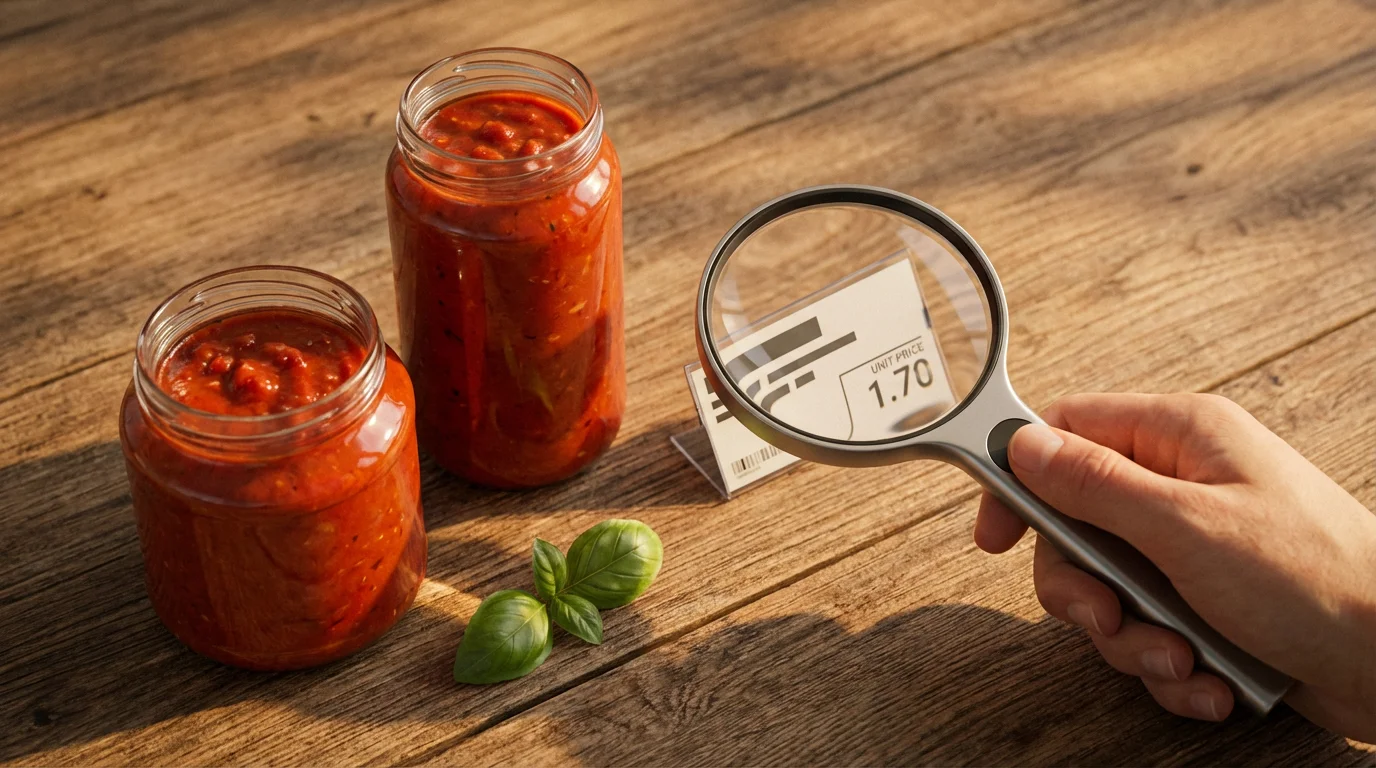
Marketing can be deceptive. A “Family Size” box of name-brand cereal might look like a better deal than the standard box of generic, but looks can be deceiving. To find the truth, you must look at the Unit Price.
In addition to comparing unit prices on the shelf, you can use price tracking tools to determine if a name-brand item is at its historical low.
The unit price is usually listed in small print on the shelf tag, often in the corner (e.g., “per ounce” or “per count”).
- Scenario: Name Brand Detergent is $15.00 for 100 oz. Store Brand is $12.00 for 90 oz.
- Math: Name Brand = $0.15/oz. Store Brand = $0.13/oz.
- Verdict: The Store Brand is still cheaper per load, but the gap is smaller than the sticker price suggests.
Additionally, compare the ingredient lists. Manufacturers are required to list ingredients in order of quantity. If the first ingredient in the name-brand pasta sauce is “tomatoes” and the first ingredient in the generic is “water” or “tomato puree,” the name brand is offering a higher-density product. However, if the lists are identical, you are likely looking at the exact same product.

Common Pitfalls to Avoid
While switching to store brands is generally a smart financial move, there are traps to watch out for.
It is also essential to know how to spot a fake sale so you aren’t misled by yellow ‘discount’ tags that don’t actually save you money.
The “Deal” Trap
Sometimes, name brands go on sale or offer coupons that make them cheaper than the store brand. If you have a coupon for $2.00 off a name-brand item that is already on sale, do the math. You might get the premium product for less than the generic price. Always check the weekly circulars or your grocery store’s app.
The False Economy of Quantity
Buying a bulk-sized generic item is only a deal if you use it all. If you buy a gallon of generic mayonnaise because it was cheap per ounce, but it expires before you use half of it, you have wasted money. Be realistic about your household’s consumption habits.
Ignoring Dietary Needs
If you have specific dietary restrictions, such as celiac disease or nut allergies, read generic labels meticulously. Sometimes name brands have dedicated “gluten-free” facilities, whereas a generic brand might use a shared facility to keep costs down, introducing a risk of cross-contamination. Always verify the safety information.
Strategies for Making the Switch
If you are accustomed to name brands, switching everything overnight can feel jarring. It might even cause a “revolt” at the dinner table. Try these strategies to ease the transition:
When shopping for essentials on your computer, using browser extensions for deals can automatically compare generic and name-brand prices across multiple retailers.
If you are looking to maximize your budget even further, learning how to shop clearance like a pro can uncover even deeper discounts than standard store-brand pricing.
- The Blind Taste Test: Serve the generic product without the packaging. See if your family notices. If they don’t say anything, you have found a permanent swap.
- The “One-at-a-Time” Method: Don’t overhaul your entire pantry in one week. Swap out two or three items per trip. This reduces the risk of buying a cart full of food you don’t like.
- Mix and Match: If the generic cereal is a little bland, mix it 50/50 with the name brand for a while, or add fresh fruit.
- Keep the Bottle: For things like hand soap or shampoo, if you prefer the aesthetic of the fancy bottle, buy it once and then refill it with the generic version.

When to Consult a Financial Professional
Optimizing your grocery budget is a powerful step toward financial health, but it is rarely a cure-all for deeper financial issues. While DIY money management works for many, there are specific times when you should seek expert guidance.
Consider consulting a professional if:
- You are relying on credit cards for essentials: If you are cutting costs on groceries but still using credit to pay for food because of cash flow issues, you may need credit counseling. Organizations like the National Foundation for Credit Counseling (NFCC) offer free or low-cost advice.
- You have significant debt: If your debt-to-income ratio is high, saving $20 on groceries won’t solve the structural problem. A financial professional can help you structure a debt payoff plan.
- You want to invest your savings: If your savvy shopping is generating a surplus of cash, a Certified Financial Planner (CFP) can help you invest that money for long-term growth. You can find certified professionals through the CFP Board.
- You are experiencing a major life transition: Divorce, job loss, or a new baby change your financial picture entirely. Professional advice can help stabilize your situation.
Frequently Asked Questions
Are store-brand medications really safe?
Yes. The FDA requires generic drugs to have the same quality, strength, purity, and stability as brand-name drugs. The manufacturing facilities for generics must meet the same federal standards of good manufacturing practices as those for brand-name drugs. You can verify this information through resources provided by USA.gov regarding health resources.
Why do some store brands taste different if the ingredients are the same?
Even if the ingredient list looks identical, the source of the ingredients or the ratios may differ slightly. For example, two cookies might both list “flour, sugar, cocoa,” but the name brand might use a higher grade of cocoa or a different baking process. These subtle differences can affect texture and flavor profile.
When should I consult a professional about my budget?
If you have cut discretionary spending and switched to generics but still cannot cover your basic living expenses, you should speak with a non-profit credit counselor immediately. They can help review your full financial picture and discuss options like debt management plans.
What are the risks of buying generic electronics or batteries?
This is a “proceed with caution” category. Generic batteries often have a shorter lifespan than premium brands like Duracell or Energizer. For high-drain devices (like digital cameras or gaming controllers), name brands are usually better. For low-drain devices (like TV remotes), generics work fine. Be wary of generic chargers for expensive electronics, as poor voltage regulation can damage your device.
Do store brands offer satisfaction guarantees?
Surprisingly, many store brands offer better guarantees than name brands to encourage you to try them. Retailers like Aldi, Costco, and Walmart often have policies where they will refund your money—and sometimes replace the item—if you aren’t satisfied with their private label product. Always check the store’s return policy.
Does buying store brand hurt the economy?
Not necessarily. While you aren’t supporting the marketing department of a major conglomerate, many store brands are manufactured by smaller regional companies or even the major brands themselves. Additionally, saving money allows you to allocate those funds elsewhere in the economy, such as saving for a home, investing, or spending on local services.
Last updated: January 2026. Information accurate as of publication date. Financial regulations, rates, and programs change frequently—verify current details with official sources.
This article was reviewed for accuracy by our editorial team.
For trusted financial guidance, visit
Consumer Reports,
The Balance,
Kiplinger,
Forbes Advisor and
Money.com.
Important: EasyMoneyPlace.com provides educational content only. We are not licensed financial advisors, tax professionals, or registered investment advisers. This content does not constitute personalized financial, tax, or legal advice. Laws and regulations change frequently—verify current information with official sources.
Disclaimer: This article is for informational purposes only and does not constitute financial, tax, or legal advice. Individual financial situations vary, and we encourage readers to consult with qualified professionals for personalized guidance. For those experiencing financial hardship, free counseling is available through the National Foundation for Credit Counseling.







Leave a Reply