Transparency: This article may reference financial products, tools, or services. If you sign up through links on this page, we may earn a commission at no extra cost to you. Our recommendations are based on editorial judgment, not compensation.
We have all experienced the frustration of buying a new appliance, laptop, or winter coat, only to see the price drop by 20% the very next week. In an economy where inflation impacts every dollar, overpaying for necessary purchases feels particularly painful. Fortunately, the days of guessing when a sale might happen are largely over.
Retailers use dynamic pricing algorithms that change costs based on demand, time of day, and inventory levels. To counter this, savvy consumers use price tracking tools—digital assistants that monitor price histories and alert you when costs drop. This guide is for everyday shoppers who want to stretch their budget further by using data, not luck, to decide when to buy.
Audience Scope: This guide is for U.S. residents and general consumers looking to optimize their household spending. If you are purchasing high-value assets for a business or have complex procurement needs, we recommend consulting with a qualified financial professional.

Key Takeaways
- History Matters: Current “sales” are often deceptive; checking a product’s price history reveals if a discount is genuine.
- Automate Savings: Use browser extensions and mobile apps to watch prices for you, rather than manually checking every day.
- Patience Pays: The most effective strategy is the “set and wait” approach, which also helps curb impulse spending.
- Privacy Trade-offs: Many free tracking tools collect data on your browsing habits; understanding permissions is vital for digital safety.
- Stack Strategies: Combine price alerts with cash-back apps and credit card rewards for maximum financial efficiency.
Understanding Price Volatility and Dynamic Pricing
Before diving into the tools, it helps to understand why prices bounce around so much. Online retailers rarely use fixed pricing. Instead, they employ “dynamic pricing,” a strategy where prices fluctuate based on sophisticated algorithms. These algorithms consider competitor pricing, supply and demand, the time of day, and even your location.
According to the Federal Trade Commission (FTC), comparison shopping is one of the most effective ways to combat these fluctuations. However, comparing prices across different stores is only half the battle. You also need to compare the price across time.
A “deal” labeled as 40% off might actually be the standard price artificially inflated the week before to make the discount look bigger. This is known as “anchor pricing.” Price tracking tools peel back these layers of marketing to show you the raw data: what the item actually cost yesterday, last month, and last year.

Essential Price Tracking Tools for Desktop and Mobile
You do not need to be a tech wizard to use these tools. Most function as simple browser extensions (for your computer) or apps (for your phone). Here are the primary categories of tools available to everyday shoppers.
These tools are especially powerful during major retail events; for instance, having a solid Prime Day strategy can prevent you from overspending on flash sales.
Browser Extensions (Best for Desktop Shopping)
These small software add-ons live in your web browser (like Chrome, Firefox, or Edge). They automatically activate when you view a product page.
- CamelCamelCamel: Specifically designed for Amazon. It provides detailed price history charts and allows you to set email alerts for specific price points. It is widely considered the gold standard for Amazon tracking.
- Honey (PayPal Honey): While famous for finding coupon codes, Honey also has a “Droplist” feature. It tracks price history on thousands of sites, not just Amazon, and notifies you if an item in your cart drops in price.
- Keepa: Similar to CamelCamelCamel but integrates a graph directly onto the Amazon product page so you don’t have to leave the site to see the history.
Mobile Apps (Best for In-Store and On-the-Go)
If you prefer shopping from your phone or checking prices while standing in a physical aisle, dedicated apps are your best bet.
- ShopSavvy: This app allows you to scan barcodes in-store to see if online retailers (or other local stores) have a better price. It also tracks price history.
- BuyVia: A helpful tool for tech and lifestyle products that curates deals and sends alerts when products you want hit your target price.
Google Shopping
You don’t always need a third-party plugin. Google Shopping has a built-in “Track Price” toggle. If you have a Google account, you can simply search for a product, toggle the tracker, and receive email updates when the price drops.

How to Read Price History Charts
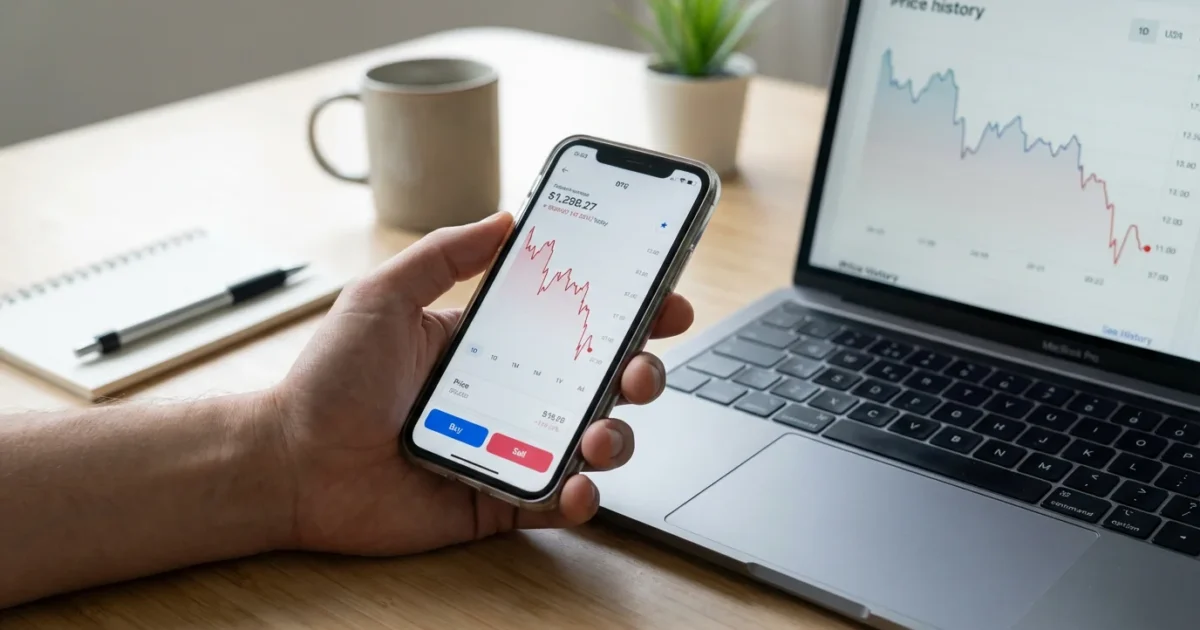
The most powerful feature of these tools is the price history graph. Learning to interpret this data prevents you from falling for fake sales. When you look at a chart, you are looking for three specific data points:
| Data Point | What It Means | Actionable Insight |
|---|---|---|
| Highest Price | The maximum amount the item has ever sold for. | Ignore this number. Retailers often keep items at this price briefly to establish a fake “anchor.” |
| Lowest Price | The absolute bottom price the item has ever reached. | This is your target. If the current price is near this number, it is a great time to buy. |
| Average Price | The typical cost of the item over the last 6-12 months. | If you can’t wait for the absolute lowest price, aiming for slightly below average is a solid strategy. |
If you see a “zigzag” pattern where the price jumps up and down every few days, the item is highly volatile. In this case, never buy at the peak; a drop is likely imminent. If the line is flat for months, the price is stable, and waiting for a massive drop might be futile.

Step-by-Step Strategy: From Wishlist to Checkout
Using a tool is easy, but integrating it into a financial strategy requires discipline. Here is a proven workflow to ensure you buy at the right time.
1. Identify the Need, Not the Want
Start by listing what you actually need. Price tracking can be dangerous if it encourages you to buy things simply because they are “cheap.” A $500 blender marked down to $250 is still $250 spent if you rarely make smoothies.
2. Analyze the History
Before adding the item to your cart, open your tracking tool. Look at the last year of data. Is the current price high, low, or average? Has it been cheaper in the past? According to Consumer Reports, checking price history is essential because prices can vary significantly depending on the retailer and the time of year.
3. Set a Realistic Target Price
Don’t just hope for a discount; set a specific target. If the item averages $100 but drops to $80 every three months, set your alert for $85. This gives you a buffer to act before the lowest price disappears.
4. The Waiting Game (The 24-Hour Rule)
Once the alert is set, walk away. This waiting period serves a dual purpose: it waits for the price to drop, and it imposes a “cooling off” period for your brain. Often, you will find that the urge to buy fades after 24 hours, saving you 100% of the cost.
5. Verify and Buy
When you get the email alert, verify the total cost. Sometimes a price drop on the product is offset by a hike in shipping costs. Ensure the final “out the door” price is truly the deal you were waiting for.

Leveraging Seasonal Shopping Cycles
Price tracking tools are reactive—they tell you what is happening now. However, you can be proactive by understanding seasonal trends. Retailers operate on predictable cycles based on inventory clearance and new product releases.
If your tracking data shows that new models rarely drop to your desired budget, buying refurbished is another safe way to get high-end tech for a fraction of the cost.
“The best time to buy is often when everyone else isn’t.”
Experts at NerdWallet often highlight that timing your purchase around these cycles can lead to significant savings. Here is a general cheat sheet for when prices historically hit their lows:
- January: Fitness equipment, bedding (white sales), and winter apparel.
- February: TVs (around the Super Bowl) and winter coats.
- April/May: Refrigerators and vacuums (new models usually arrive in summer).
- August/September: Laptops (back-to-school sales) and outdoor furniture.
- November: Electronics, appliances, and smart home gadgets (Black Friday).
If your price tracking tool shows a graph that dips annually in November, and it is currently October, you know exactly what to do: wait.

Privacy and Security Considerations
While these tools are free to use, “free” usually means you are paying with data. To function, browser extensions need permission to read and change data on the websites you visit. This is necessary for them to see the price and apply coupons, but it is a significant level of access.
To protect yourself:
- Read the Privacy Policy: Does the tool sell your data to third parties? Reputable tools like CamelCamelCamel and Honey have clear policies about what they do with your data.
- Limit Permissions: In your browser settings, you can often restrict extensions to run only when you click them, rather than running constantly in the background.
- Use Guest Mode: If you are uncomfortable with an extension tracking your browsing, consider using a separate browser profile solely for shopping.
For more information on protecting your digital privacy, review the consumer tips provided by the Federal Trade Commission (FTC).

Common Pitfalls to Avoid
Even with the best tools, it is easy to make mistakes. Here are the most common traps shoppers fall into.
The “Deal” That Isn’t a Deal
Just because an item is at its “lowest price ever” doesn’t mean it is a good product. Retailers often deeply discount poorly reviewed or discontinued items to clear warehouse space. Always cross-reference price data with product reviews.
Ignoring Shipping Costs
A price tracker might alert you that a camera has dropped from $500 to $450 at a specific retailer. However, if that retailer charges $40 for shipping while a major competitor offers free shipping at $480, your actual savings are negligible.
Analysis Paralysis
It is possible to obsess over saving an extra $2. If you need an item immediately—like a replacement car battery or a heater in winter—tracking the price for weeks to save 3% is not worth the inconvenience or risk. Value your time as much as your money.

When to Consult a Financial Professional
While price tracking tools are excellent for optimizing everyday spending, they are not a cure for deeper financial issues. Saving $20 on a toaster does not help if you are struggling with significant debt or compulsive spending habits.
We recommend seeking guidance from a qualified financial professional if:
- You are using shopping to cope with stress: If you find yourself obsessively tracking prices and buying items you don’t need to get a dopamine hit, this may indicate a spending addiction.
- Your debt is unmanageable: If you are carrying high-interest credit card debt, no amount of bargain hunting will mathematically offset the interest you are paying.
- You need a comprehensive budget: If you don’t know where your money is going every month, you need a holistic financial plan, not just a shopping tool.
For free or low-cost advice, you can contact the National Foundation for Credit Counseling (NFCC). They can connect you with certified counselors to help build a sustainable financial path.
Frequently Asked Questions
Do price tracking tools work for groceries?
Generally, browser extensions work best for durable goods like electronics and clothing. However, many grocery store apps now offer digital coupons and personalized “price tracking” based on your purchase history. Apps like Flipp also allow you to compare local circulars to find the best price on food items.
Are browser extensions for shopping safe?
Most popular extensions from established companies are safe, but they do require access to your browsing data to function. Stick to well-known tools with high user ratings and clear privacy policies. Avoid installing obscure extensions from unknown developers.
Can I get a refund if the price drops after I buy?
This is called “price protection.” Some retailers will refund the difference if the price drops within a certain window (usually 14 days), but you often have to ask. Some credit cards used to offer this as a perk, though many have discontinued it. It is worth checking your credit card benefits guide to be sure.
When should I consult a professional about my spending?
If your shopping habits are causing you to miss bill payments, accumulate debt, or hide purchases from family members, you should consult a financial therapist or a credit counselor immediately. Resources like the National Foundation for Credit Counseling are a great starting point.
What are the risks or limitations of price tracking?
The main risk is privacy exposure, as you are sharing browsing data. The limitation is that tools may not track every single retailer, potentially missing a lower price at a smaller store. Additionally, they cannot predict supply chain shortages that might drive prices up unexpectedly.
Does using a tracker guarantee the lowest price?
No tool can guarantee the absolute lowest price because they may not monitor every niche website or local clearance sale. They are tools for probability and history, helping you make a more informed decision rather than a perfect one.
Is it worth tracking prices for small items?
If you buy the item frequently (like diapers or coffee pods), tracking small items can add up to significant yearly savings. For a one-time purchase of a $10 item, the time spent tracking it may outweigh the $1 or $2 savings.
Last updated: January 2026. Information accurate as of publication date. Financial regulations, rates, and programs change frequently—verify current details with official sources.
This article was reviewed for accuracy by our editorial team.
For trusted financial guidance, visit USA.gov Benefits, National Credit Union Administration (NCUA) and AARP Money.
Important: EasyMoneyPlace.com provides educational content only. We are not licensed financial advisors, tax professionals, or registered investment advisers. This content does not constitute personalized financial, tax, or legal advice. Laws and regulations change frequently—verify current information with official sources.
Disclaimer: This article is for informational purposes only and does not constitute financial, tax, or legal advice. Individual financial situations vary, and we encourage readers to consult with qualified professionals for personalized guidance. For those experiencing financial hardship, free counseling is available through the National Foundation for Credit Counseling.









Leave a Reply